
What is Saddle Hunting? A Complete Guide for Beginners
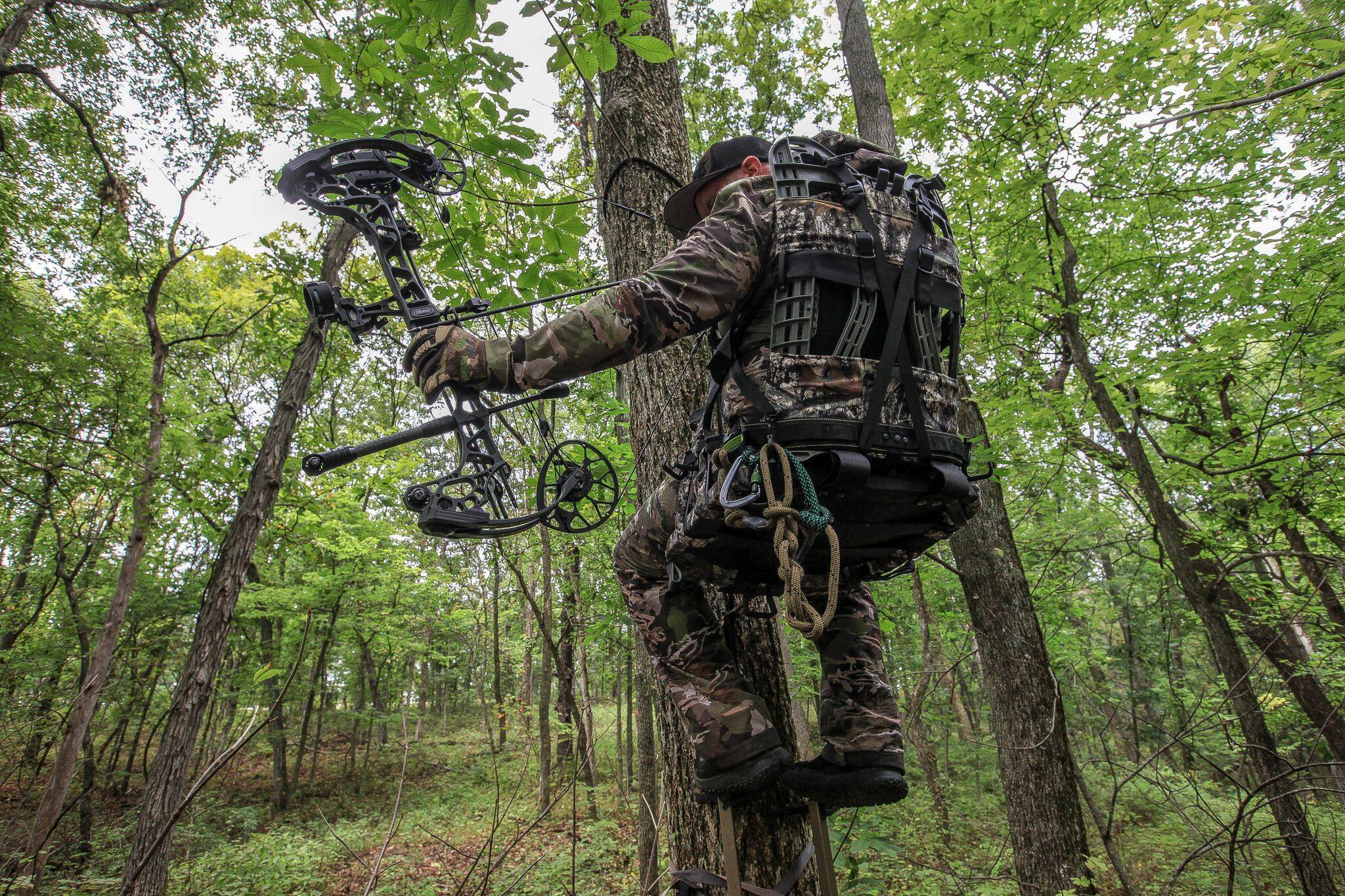
The Short Answer: Saddle hunting is a method of deer hunting where you suspend yourself from a tree in a wearable harness called a saddle. This gives you the advantage of picking your perfect hunting location in the woods and staying mobile once you're in the tree. The rope system attaches to the saddle with you facing the tree, and keeps you attached to the tree during your climb and throughout your hunt. Unlike a traditional tree stand, there is no fixed platform locking you in one direction, so you can pivot around the tree to get into the perfect shot position.
There are various ways to get into the tree when saddle hunting, but the most popular way is by utilizing portable climbing sticks. Each stick is attached to the tree as you climb, and you are secured to the tree with a lineman's rope attached to your saddle. Once at hunting height, a tether rope is girth hitched to the tree and attached to your saddle, allowing you to remove the lineman's rope and suspend yourself from the tether, creating unmatched mobility.
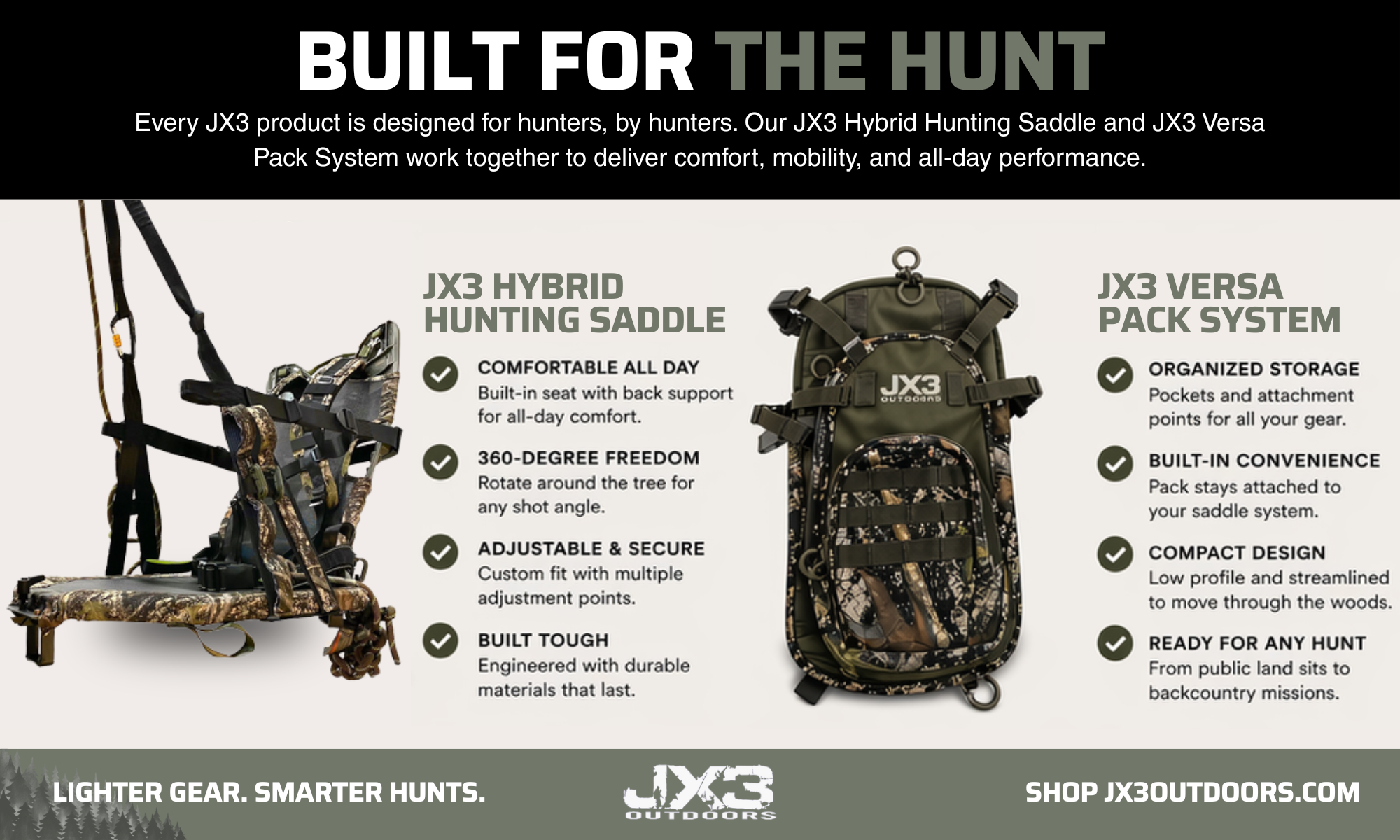
Not all saddles are built the same. Traditional soft saddles use fabric, webbing, and rope alone, while the JX3 Hybrid combines a pack frame with a built-in foldable seat for added comfort and versatility. The Hybrid hunting saddle pairs safety and mobility in a lightweight, packable system that lets you hunt a wider variety of trees and locations than a traditional stand allows.
What is a Hunting Saddle?
Typically, a hunting saddle is a fabric harness that holds you in position while you hunt, with you standing on a platform. Your weight rests in the saddle and pulls down on a short rope sewn across the front called the bridge. The bridge connects to your tether, which runs up to a knot above your head and holds you against the tree. From that suspended position, the tree itself acts as your pivot point, which is what lets you rotate into position no matter which direction the deer comes from.
The tradeoff with a traditional soft saddle is comfort. Hanging from a fabric bridge for hours puts pressure on your hips and legs, and many hunters find themselves shifting around to relieve pinch points or to relieve lower body aches. The JX3 Hybrid solves this by replacing the all-fabric design with a contoured frame and seat, so your weight rests on a chair-like surface instead of a fabric sling. That difference is what makes all-day sits possible and comfortable without the leg fatigue that comes with soft saddles.
What Makes the JX3 Hybrid Different
The JX3 Hybrid is a one-of-a-kind patented design that combines the mobility of a saddle system with the comfort of a built-in seat. Beyond the seating structure upgrade, the Hybrid brings several features no soft saddle can match.
The built-in fork on the saddle rests against the tree instead of having to use your knees, so there is no need for knee pads or padding wraps. From hunting height, the Hybrid gives you a full 360-degree shooting window just like a traditional soft saddle, with the added benefit of unmatched comfort.
The Hybrid is also a 3-in-1 system. The same gear that suspends you in the tree converts into a ground chair ideal for turkey hunting, and the frame doubles as a pack system for hauling gear in or game out. One piece of equipment, multiple uses.
Saddle Hunting vs. Tree Stand Hunting
The biggest differences between a saddle and a tree stand are how you are supported in the tree and how that affects the shots you can take.
How You Are Supported
In a tree stand, you are on a fixed platform facing away from the tree, which limits both your hunting locations and your shooting positions. With a saddle, you can climb a variety of trees on the fly, and once in the tree, you are tethered facing the trunk, giving you cover and almost unlimited mobility for the ideal shooting position.
360-Degree Shooting
Because you face the tree in a saddle, the trunk becomes a pivot point you can rotate around to take shots in any direction. A traditional stand typically gives you 180 degrees of clean shots before the trunk gets in the way. A saddle lets you easily and quietly pivot around the tree to take a shot in almost any direction, which is a huge advantage when a deer comes in from a direction you did not expect.
Tree Selection
Tree stands need a relatively straight tree with a clean trunk and the right diameter to mount a platform safely. This means setting up where the tree works instead of where the deer are moving. A saddle removes most of that restriction. Because you are tethered to the trunk instead of attaching a platform to it, you can hunt crooked trees, leaning trees, smaller diameter trees, and trees with limbs in the way. That flexibility allows you to set up tight to a specific funnel, pinch point, or food source instead of settling for the nearest "stand tree" fifty yards off the trail.
Why Is Saddle Hunting Gaining Popularity?
Saddle hunting has been around for over 30 years, originally popularized by bowhunters who wanted a lighter, more mobile alternative to hang-on stands and climbers. In the last decade, saddle hunting has exploded in popularity, especially among public land hunters and bowhunters who need to cover ground to find deer. Improvements in saddle design, lightweight climbing sticks, and gear have made the system more comfortable and accessible to first-time users than ever before.
What Gear Do You Need to Saddle Hunt?
A complete saddle hunting setup has five core pieces, plus a few optional comfort upgrades that make long hunting sessions easier.
1. The Tree Saddle
The saddle is the anchor piece of the whole setup. Traditional saddles are a fabric harness that holds you in a standing position while suspended from the tether, allowing for mobility while in the tree. The JX3 Hybrid adds a built-in seat, a contoured backrest, and a pack frame, which creates a chair in the tree when deployed, allowing you to stand or sit comfortably all day without the hip pinch, leg pain, and back pain of a traditional saddle.
2. Climbing Sticks
Your climbing method gets you from the ground to your ideal hunting height. Climbing sticks are the most common choice for saddle hunters, and three to four sticks will get most hunters to 20 feet comfortably. The JX3 Climbing Stick Set includes four sticks and a wide top step designed to attach directly to the JX3 Hybrid for a quiet, compact climb.
3. The Lineman Rope
Every saddle setup needs a lineman rope, which keeps you connected to the tree while you climb. It wraps around the tree and lets you safely work with both hands. The JX3 Lineman's Rope Set contains 11mm rope, a pre-tied prusik and carabiner, and is included with every JX3 Hybrid.
4. The Tether Rope
The tether holds you in the tree once you are at hunting height. A quality tether rope is rated to several thousand pounds and uses a prusik knot for easy height adjustments. The JX3 Tether Rope Set includes the tether, prusik, carabiner, and stopper ball (included with your JX3 Hybrid).
5. A Platform or Top Step
A platform gives you a surface to stand on when saddle hunting. With a traditional fabric saddle, hunters typically rely on a platform, climbing sticks, or screw-in steps to stand on while hunting. With the JX3 Hybrid, a platform is not needed because the saddle is designed to keep you comfortably seated or standing, reducing the cost and weight of your hunting setup. The top step on your top climbing stick handles both jobs, giving you a place to prop your feet
How Saddle Hunting Works
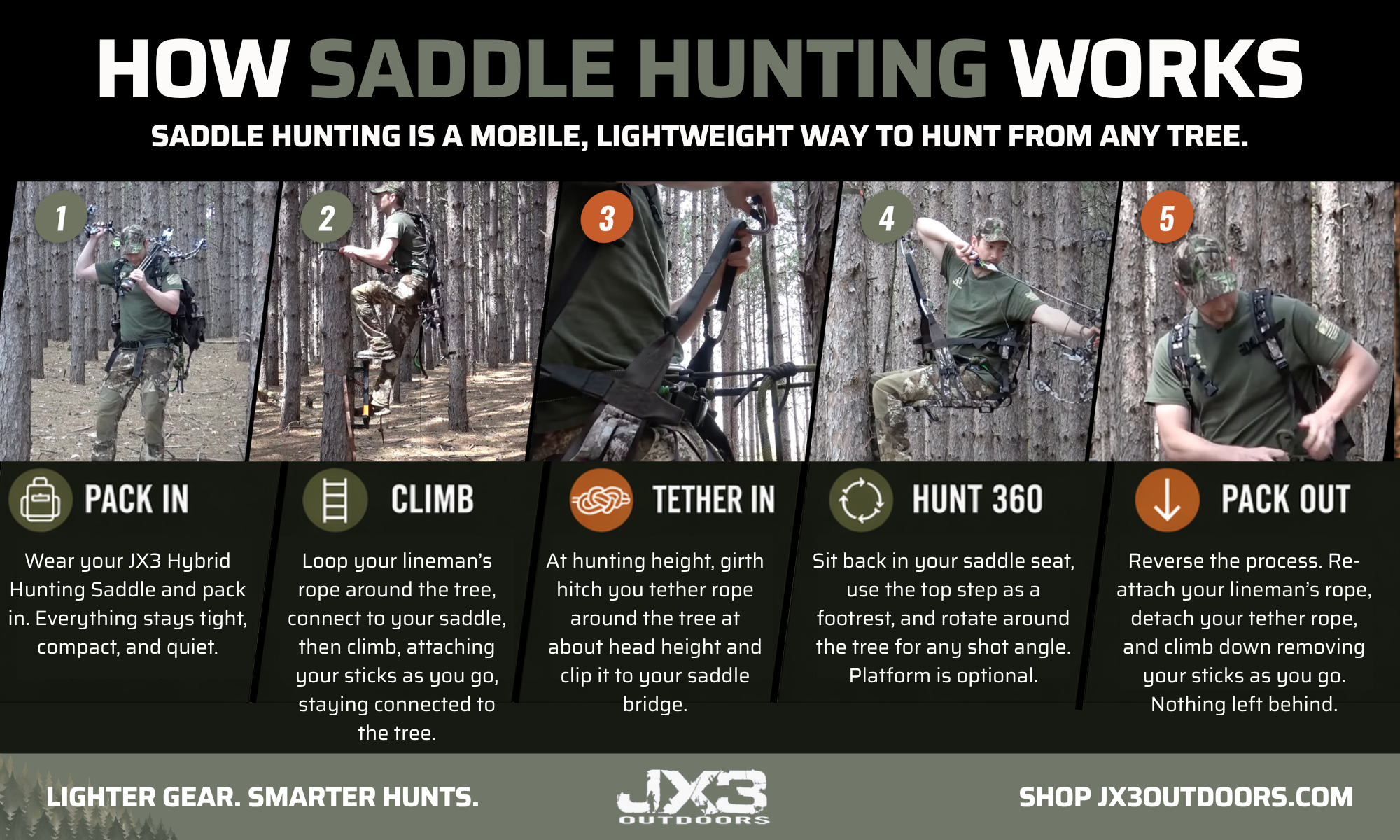
Saddle hunting is about staying connected to the tree from the moment you leave the ground until the moment you step off. Here is how a saddle hunt plays out from start to finish.
Before the Climb
Pick your tree. Most saddles and sticks work on trees between 8 and 24 inches in diameter. Straight trees are easier to climb, but crooked trees and leaners often offer better concealment and angles, so there is no wrong answer. Walk around the entire tree before you climb to plan your shot angle on your strong side. Most saddle hunters set up between 17 and 22 feet, but 18 feet in good cover beats 25 feet with no cover.
The Climb
The climb is the phase that looks the most different from traditional tree stand hunting. Instead of carrying a stand up and hanging it, you climb the tree itself with a portable set of sticks and stay attached to the tree via a lineman's rope the whole way up.
Once you have picked your tree, loop your lineman rope around the trunk and attach it to the lineman's loop on your saddle. The lineman rope keeps you connected to the tree while you climb, setting your climbing sticks as you go. Climbing sticks work on almost any tree. For a step-by-step walkthrough on attaching climbing sticks to the JX3 Hybrid, read our climbing stick attachment guide.
The Tether
Once you reach hunting height, the tether rope becomes your main connection to the tree. You wrap it around the trunk at about head height and lock it in place with a simple knot called a girth hitch. Connect the tether to the bridge of your saddle using a carabiner. Sit back, unclip your lineman rope, and let the tether do all the work.
The Hunt
If using a traditional soft saddle, you will stand on the top step of your sticks or a platform, and lean back into the saddle. If using the JX3 Hybrid, simply lean back as if sitting in a chair as the saddle forms a seat around you, allowing you to sit comfortably for hours. Because of the design of the JX3 Hybrid, you are not forced into a standing or leaning position, you can simply rest your feet on the top step of your climbing stick. No platform required. From there, the trunk becomes your pivot point so you can rotate around the tree to take a shot from any direction, including the ones that come from behind you.
The Exit
When the hunt is over, you do the climbing process in reverse. The lineman rope goes back on, the tether comes down, and you climb down the sticks, taking them off the tree as you go. Nothing gets left behind, and you can move setups easily if the wind or signs tell you to.
Why Hunters Are Switching From Tree Stands to Saddle Hunting
Hunting saddles have advantages that a traditional tree stand simply cannot beat. Here is what pulls hunters to a saddle system and keeps them there.
Mobility That Matches the Deer
A traditional tree stand keeps you tied to one tree. A saddle goes wherever you go and works on whatever trees (straight trees, crooked trees, leaning trees, or split trunks) you find when you get there. If the wind shifts, or if deer patterns change, you can move and set up on a new tree that gives you a better advantage. Being able to move quickly matters, especially on public land where pressure can push deer off predictable patterns fast.
Safety From the Ground Up
When you saddle hunt, you stay attached to the tree from the moment you leave the ground. Most tree stands do not include climbing protection, and that is where most falls occur while hunting. Studies on tree stand safety have estimated that as many as 300 to 500 hunters are killed and another 6,000 are injured in tree stand accidents in the U.S. every year, with most of those injuries happening while climbing up or down from the stand.
Lightweight and Quiet
A tree saddle setup weighs much less than a climber or a hang-on stand with sticks, and it makes a fraction of the noise. Pulling a tree stand up to hang is one of the loudest things a hunter does, and a saddle system takes it out of the equation entirely. You climb with your sticks, tether off, and sit down.
Packing in long distance and packing out game on the same trip is even easier with a JX3 Hybrid saddle. The lightweight setup packs down small, with the seat frame folding up and attaching to the pack frame, allowing you to strap game or gear directly to the saddle frame for the hike out. Hunters who used to stop at a half mile from the road can now go miles deep to hunt ideal locations.
Hunts From the Ground When You Need It
Not every hunt happens in a tree. The JX3 Hybrid converts to a low-profile ground chair for fence row sits, clear-cuts, brushy field edges, and spring turkey hunts, so you stay comfortable and concealed at ground level. That means one setup for both your tree sits and your ground sits instead of packing a separate chair.
Minimal Impact on the Woods
Saddle hunting is one of the lowest impact ways to hunt from a tree. You leave nothing behind. There are no screw-in steps drilled into trees and no permanent stands left to weather and rust on public ground. For public land hunters who care about the Leave No Trace ethic, saddle hunting fits that philosophy perfectly.
Making the Switch
If you have hunted from a hang-on stand, a climber, or the ground for most of your career, the move to a saddle is going to have a slight learning curve. Most hunters who make the switch say the same thing: it clicks faster than expected. Trevor, a bowhunter with over 15 years in the woods, has hunted from just about every setup you can name. Here is what he had to say about the switch:
"Over the last decade, I've made every bowhunting mistake possible: not using the wind correctly, picking the wrong tree to sit, moving at the wrong time, not sitting long enough, and just plain out missing opportunities to name a few. Sometimes that's just how it goes, the animal outsmarts or outwits us, but over the last few years, the odds have started to turn more in my favor with the transition into saddle hunting."
Read Trevor's full breakdown of his first deer season in a saddle, including how he learned the setup, what surprised him most in the tree, and why he is not going back to traditional stands.
The Right Gear Makes Every Hunt More Productive
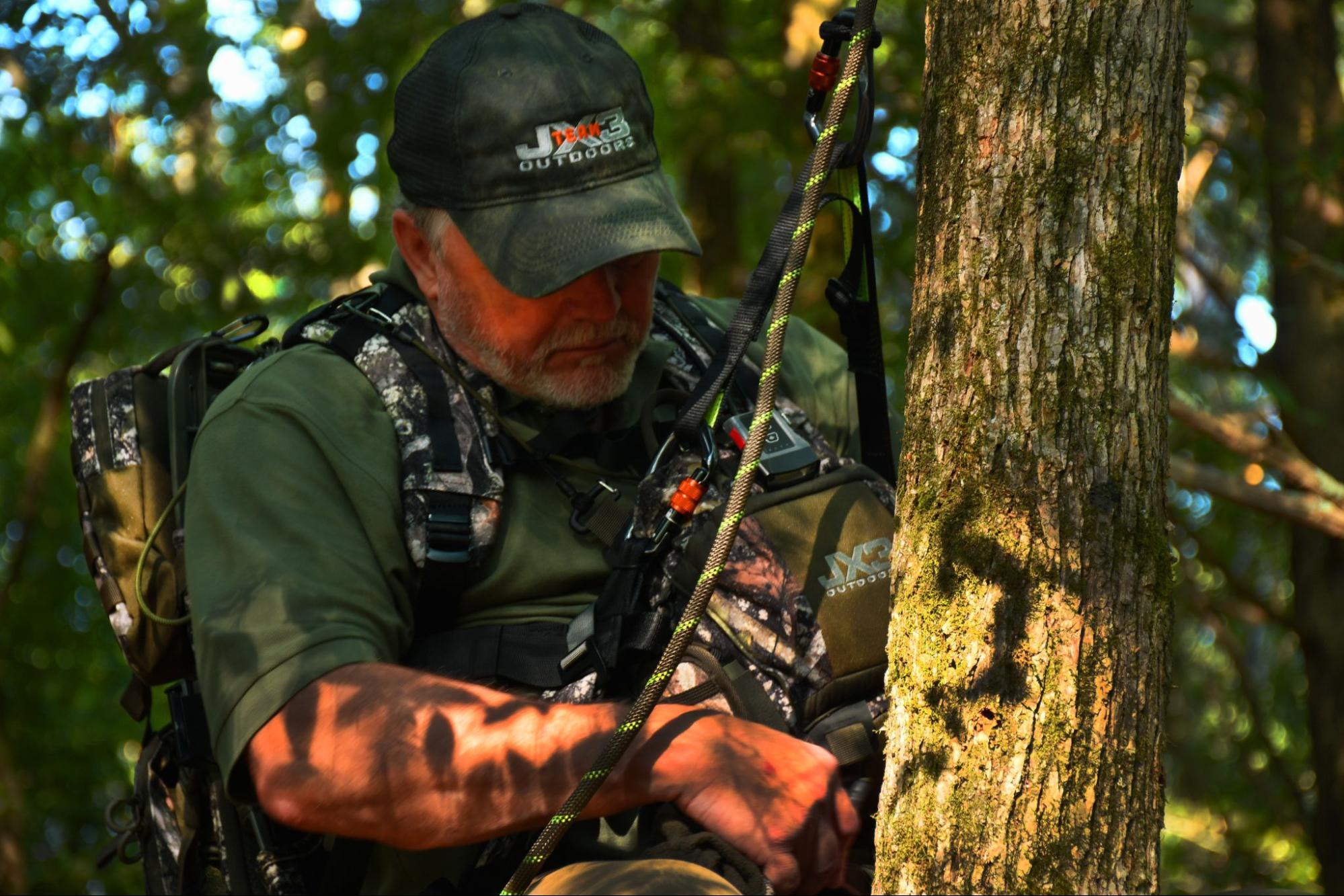
Being able to move quickly when the wind shifts, climb almost any tree, and sit comfortably for hours without leaving the stand is what gives JX3 hunters an advantage in the field. With the JX3 Hybrid Hunting Saddle, you get the mobility of a saddle and the comfort of a climber, without the hip pinch or lower body aches and pains that push hunters out of a traditional saddle after a few hours.
Hunt deeper, stay longer, and shoot from any angle. Shop the JX3 Hybrid to get the full system, or watch our gear in action to improve your setup and skills.