
What do Deer Eat?
What do Deer Eat? Feeding Habits Explained and How This Can Help Your Hunting Strategy
Quick Guide: Whitetail deer are selective eaters, feeding mostly on a variety of plant-based foods, with 85% of their diet consisting of browse (woody plants), forbs (broad-leaf plants), and mast (nuts/fruits). They prefer high-quality, easy-to-digest food and can chow down on over 400 different plant species.
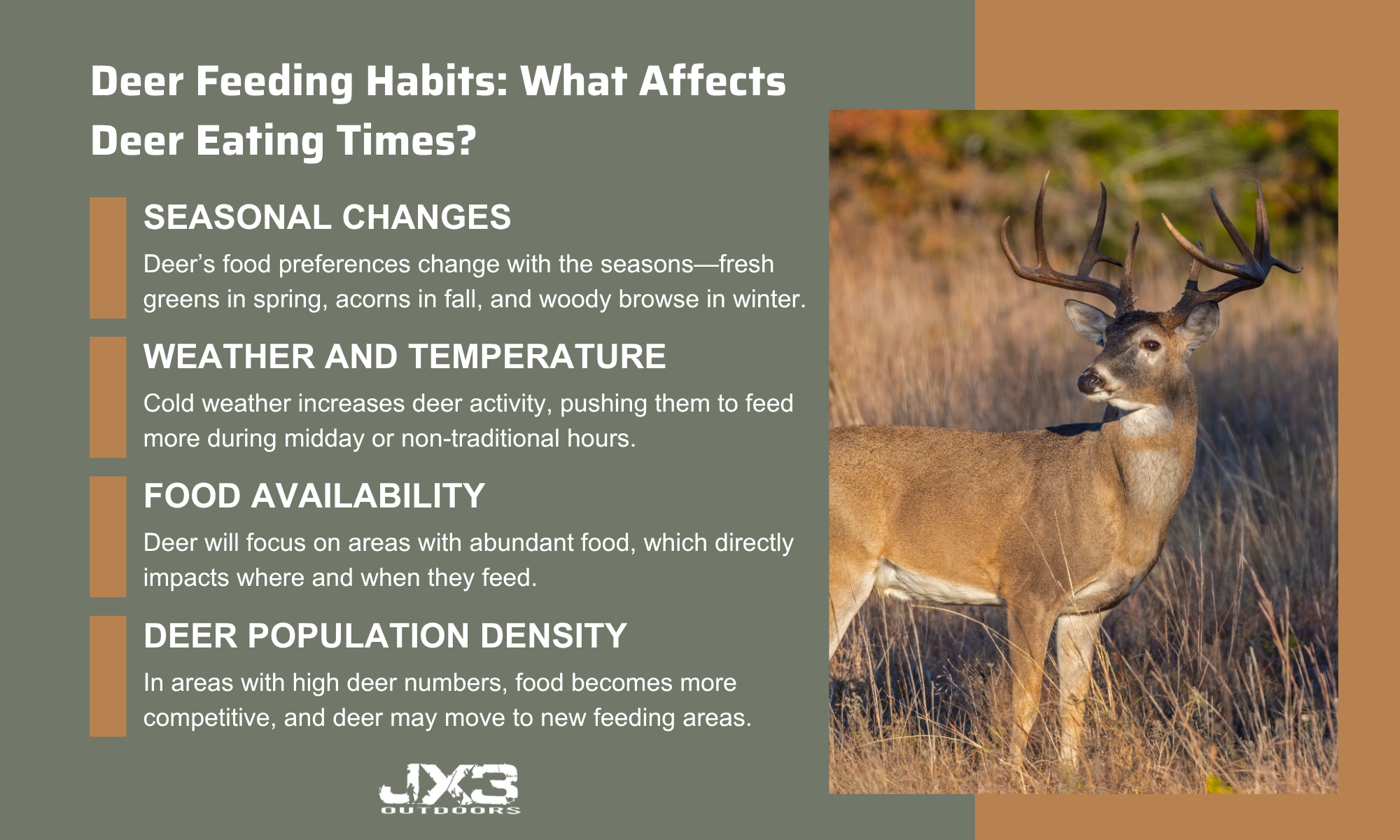
If you're looking to up your hunting game, understanding deer diet is a game-changer. Deer feeding patterns directly impact where and when you'll find them in the woods, which can make or break your hunt. Their food preferences change with the seasons, affecting their movement patterns and behavior throughout the year.
Whitetails change up what they eat with the seasons, moving between different food sources as their needs shift. From spring browse species to late-season crops, understanding these feeding patterns helps predict deer activity and movement. Whether you're scouting early-season hotspots or identifying late-season feeding areas, knowing their preferred food sources is key to successful hunting strategies.
Deer Digestive System and Food Requirements
Whitetail deer have evolved some unique ways to process their food. Their narrow snout and long, agile tongue work like precision tools, letting them carefully pick out the most nutritious parts of plants. This specialized equipment gives them an edge over other animals when it comes to finding the best food in their environment.
Special Digestive Features
What really sets the deer population apart is their unique digestive system. They've got special enzymes in their saliva that can handle plants that would make other animals sick. For example, these enzymes let them chow down on acorns that would actually kill a cow. Their stomach works faster than larger animals like elk or cattle, which means they need to be pickier about what they eat.
Quality Over Quantity
Because deer process food so quickly, they can't just graze on anything. They need high-quality, easy-to-digest food to get enough nutrients. When deer only have access to tough, woody plants or mature grasses, they can actually starve even with a full stomach. This happens because their digestive system just can't pull enough nutrients from low-quality food fast enough.
Daily Feeding Schedule
Deer typically feed heaviest during dawn and dusk. They'll browse for food about 4-5 times over 24 hours, spending several hours each time filling their bellies. A typical adult deer needs to eat about 6-8% of their body weight in fresh food daily. This means a 150-pound deer might munch through 9-12 pounds of plants each day, adjusting their intake based on the quality of food available and the season.
Main Food Sources
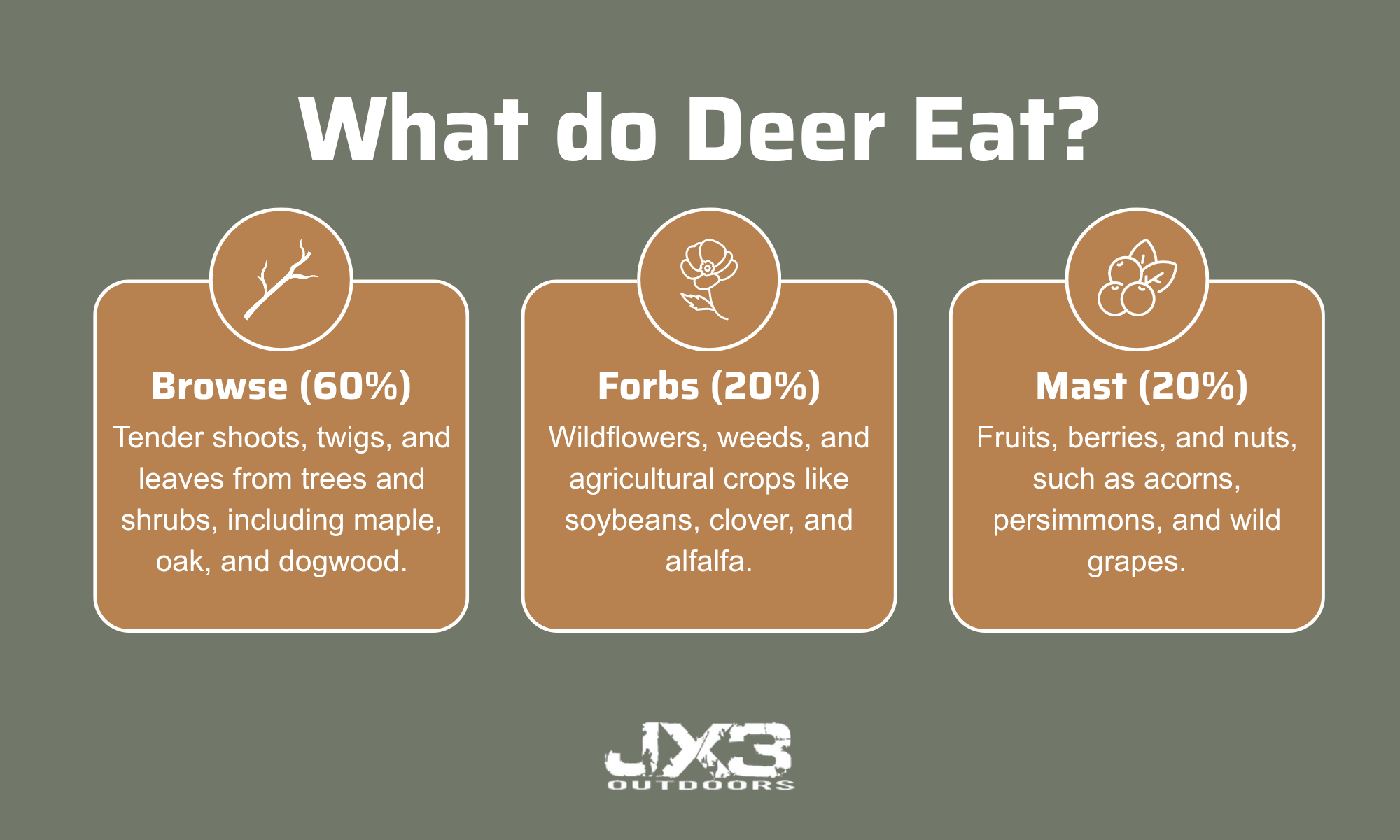
Browse makes up the biggest chunk of a deer's diet, accounting for about 60% of what they eat throughout the year. These woody plants include tender shoots, twigs, and leaves from trees and shrubs. Deer particularly like munching on the fresh growth of maple, oak, and dogwood trees. During winter, they'll even eat pine needles when other food is scarce.
Forbs, or broad-leaf plants, are the second most important food source for deer. These plants include wild flowers, weeds, and agricultural crops that make up roughly 20% of their diet. Deer absolutely love soybeans, clover, and alfalfa when they can find them. They'll also happily feast on garden vegetables like peas and lettuce, which any backyard gardener can tell you about.
Mast rounds out the deer's menu and can really change their movement patterns throughout the seasons. Soft mast includes fruits and berries like blackberries, persimmons, and wild grapes that deer eat during the summer months. Hard mast, especially acorns, becomes super important in the fall when it can make up nearly 30% of their diet. During autumn, you'll often find deer concentrated around oak trees, loading up on these high-energy source acorns before winter hits. This is why knowing your local oak trees can help you pattern deer movement during hunting season.
These three food sources - browse, forbs, and mast - make up about 85% of what deer eat throughout the year. The mix changes with the seasons, but these are the foods that keep deer healthy and on the move in your hunting area.
Seasonal Variation in Diet
Late Spring
A deer's menu shifts into high gear when spring hits. They target fresh growth popping up everywhere - food plots, tender shoots, and spring plants. These early-season foods help bucks and does bounce back from winter and pack on weight for antler growth and fawning.
Summer Months
During summer months, deer stick to leafy plants but add sweet stuff like blackberries and mulberries. You'll catch them working ag fields at first and last light, hammering soybeans. All that protein helps them bulk up and keeps those antlers growing strong.
Fall
Fall is when deer really pack on the pounds. Acorns become their go-to food, making up about 30% of what they eat. Think of them as nature's power food for deer. They also hit corn and soybean fields hard, building fat reserves before the rut kicks in and winter arrives.
Winter Cold
Winter tests a deer's toughness. When most vegetation dies or gets buried in snow, they switch to woody browse - munching twigs and buds from cedar and maple trees. Their metabolism actually slows down to help them survive on these basic foods. They'll also dig for buried acorns or winter wheat. This adaptability is what makes whitetails such incredible survivors.
Make Every Hunt Count
Understanding what deer eat and how their feeding habits change with the seasons is essential for any hunter looking to improve their chances in the field. From early spring, when deer seek out tender shoots and fresh growth, to the winter months, when they rely on browse and hard mast like acorns, deer feeding patterns directly impact where and when you’ll find them. By studying these patterns, you can plan your hunt more effectively, whether you’re scouting early-season hotspots or positioning yourself around oak trees in fall.
For hunters, this knowledge helps you stay one step ahead. But it’s not just about knowing where to hunt—it’s about being fully equipped with the right hunting gear. JX3 Outdoors offers top-quality hunting gear and accessories that help you adapt to changing conditions, making sure you’re ready no matter what the season throws at you.
Plan your next hunt based on deer feeding habits and equip yourself with the best from JX3 Outdoors to make it a success. Contact JX3 today to learn more.