
The Best States for Public Land Whitetail Deer Hunting
Sep 29th 2026
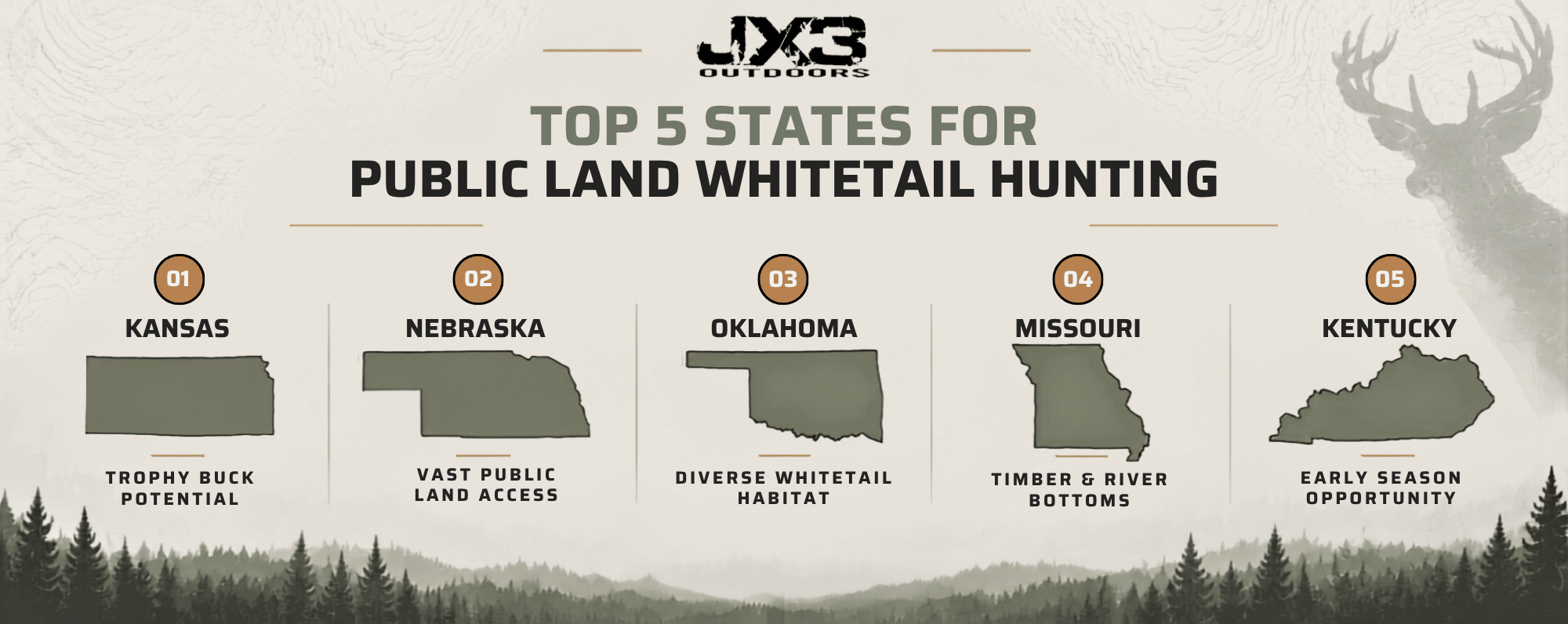
The Short Answer: The best public land deer hunting for whitetails is in states with room to roam and real public hunting access. The top picks are Kansas, Nebraska, Oklahoma, Missouri, and Kentucky. Each one holds good deer on public ground, and rewards the hunter who scouts hard and hunts where others will not walk.
Public land is the great equalizer. You can’t just own a farm or pay for a lease to kill a good buck. You need a tag, a map, and the willingness to work for it. The catch is that public land deer are pressured, so they are more nocturnal and get smart quickly. Beating them comes down to two things: picking the right ground, and being mobile enough to hunt where the deer actually are instead of where it is easy to park.
What Makes a State Good for Public Land Deer Hunting
Not all public ground is equal. Before you pick a state, it helps to know what separates a good public land deer hunting destination from a crowded one.
Three things matter most:
First is public hunting access, meaning how many acres are actually open to you, whether that is a wildlife management area, national forest lands, state lands, or a walk-in program that opens private land to public hunting.
Second is deer quality, whether the state grows mature bucks and holds a healthy herd.
Third is pressure, since a state can have great deer and plenty of acres but still feel crowded near every parking area. The best states balance all three, and the smart hunter uses that same filter on every hunting spot they scout.
The Best States for Public Land Whitetails
Kansas
Kansas tops the list for public land whitetails. Even though the state is roughly 97 percent privately owned, its Walk-In Hunting Access program opens more than a million acres of private land to public hunters each season, on top of its wildlife areas and federal ground.
The deer are worth the trip, since Kansas regularly produces a big buck in the 150-inch class on public walk-in ground, and their long deer season covers the entire rut. Non-resident archery tags are available over the counter for bow hunters, and river-bottom timber and cedar draws give a saddle hunter plenty of trees to work.
Nebraska
Nebraska gives you a lot of deer for a smaller tag investment, with cheaper, easier-to-get tags than most of its neighbors. Hunters can access over a million acres through the state's Public Access Atlas, which maps every WMA, national wildlife refuge, national forest, and Open Fields and Waters walk-in parcel in one place.
Archery opens September 1, so check the season dates and catch bucks early while they are still patternable. The Sandhills and the river corridors hold the best deer. Worth knowing for saddle hunters: Nebraska only allows portable tree stands on WMAs from August 15 through January 31, so check the rules where you plan to hunt and plan accordingly.
Oklahoma
Oklahoma quietly offers some of the more varied public ground in the region. Its wildlife management area system spreads across very different terrain, from eastern hardwoods to western river country, and over-the-counter access makes it easy to plan a trip.
Pressure runs high near the roads in the best-known areas, so the hunter who walks deep or hunts the awkward pockets often finds a better hunting spot. Some state park ground is open to hunting too, so check every option to find your best fit.
Missouri
Missouri is about simple access and a lot of it. The state's conservation department manages an enormous network of public areas, and deer tags are sold over the counter, so there is no draw to gamble on. The Ozark hardwoods and the farm-country timber both hold whitetails, and a deer hunter who finds the food sources will find the deer.
Kentucky
Kentucky offers strong public access and one of the earliest openers in the country. The early archery season means a chance at a buck still in velvet, though opening weekend can be hot. The statewide herd tops a million deer, and the state's public land and generous season structure make it a fair fit for a traveling hunter. As always, confirm the current license and bag limit before you go.
How to Find Public Land in Any State
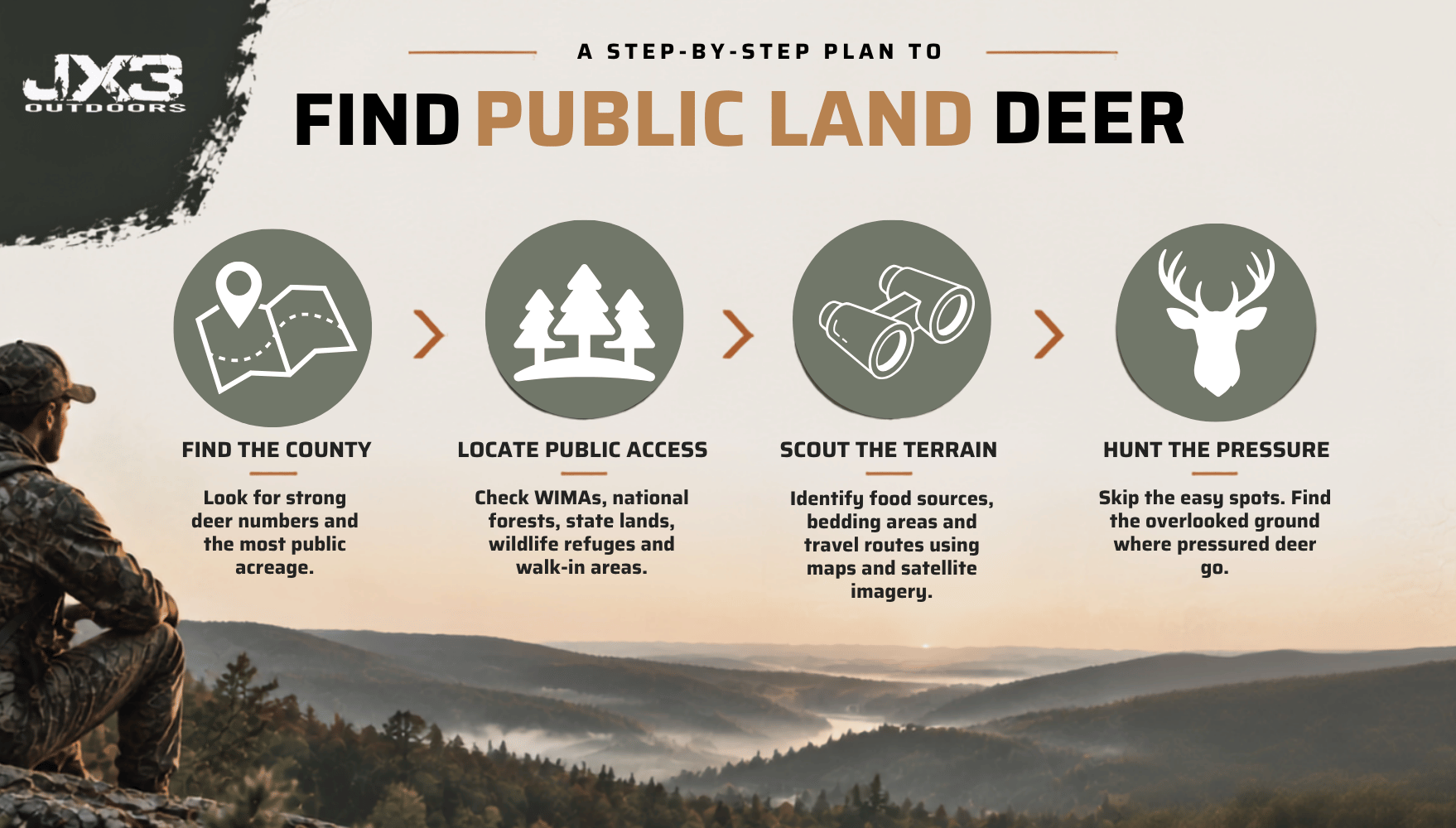
The states change, but the way you find good ground does not. Start broad, then narrow. Begin at the state level and find the counties with the best deer numbers and the most public acreage. Then find every kind of public land in those counties, because there is more than one.
A single county might hold a wildlife management area, state forest, national forest, a national wildlife refuge, Army Corps of Engineers ground around a lake, and walk-in parcels enrolled through a state access program.
An interactive map does the heavy lifting here. Most state wildlife agencies publish a public access atlas, and mapping apps let you scout terrain, plan your access routes, mark the parking lot, and find the bedding area, pinch points, and travel corridors from your couch.
Once the season opens, trail cameras help confirm which spots the deer are using. Look for the awkward ground that other hunters skip: the far corner of a WMA, the state forest timber a half mile past the last parking area, the creek bottom nobody wants to walk into. That is where the pressured deer go. Our Deer Hunting 101 hub covers more on reading terrain and picking stand locations.
Stay Mobile to Beat the Pressure
Nothing beats a mobile hunting saddle on public ground. It lets you hunt the deep, pressured pockets a fixed stand can never reach. Flexibility is everything on public land, because the deer shift as the pressure shifts.
The JX3 Hybrid hunting saddle and a set of JX3 Climbing Sticks pack in light and quiet, so you can easily cover ground, climb the right tree, and stay off a buck's radar. The JX3 Versa Pack System keeps your gear organized for the long walk in. If you are new to this style, our complete guide to saddle hunting covers the basics.
When you are ready to build your setup, take a look at the full JX3 Outdoors lineup and see the gear in action on our JX3 videos page.
Frequently Asked Questions
What is the best state for public land deer hunting?
Kansas is the top pick for public land whitetails, thanks to its Walk-In Hunting Access program that opens more than a million acres each season and its reputation for mature bucks. Nebraska, Oklahoma, Missouri, and Kentucky round out the best options.
How do I find public land to hunt?
Start by finding the counties with good deer and plenty of public ground, then look up every type of public land there: WMAs, national and state forests, national wildlife refuges, Corps of Engineers land, and walk-in access parcels. A state public access atlas and a mapping app make it easy.
Do I need a special license to hunt public land?
You need the state's standard hunting license and a deer tag, and some states require extra stamps or permits. Walk-in programs let you hunt land that private landowners have enrolled for public access, usually covered by your regular license. License structures, bag limit rules, and regulations vary, so check the state wildlife agency before you buy.
Is saddle hunting good for public land?
It is one of the best setups for public land. A saddle and climbing sticks pack in light, let you hunt the exact tree you need to , and let you move as the pressure moves, which is exactly what pressured public land deer demand.