
Best Turkey Calls: Box, Slate, and Mouth Calls Explained
Apr 16th 2026
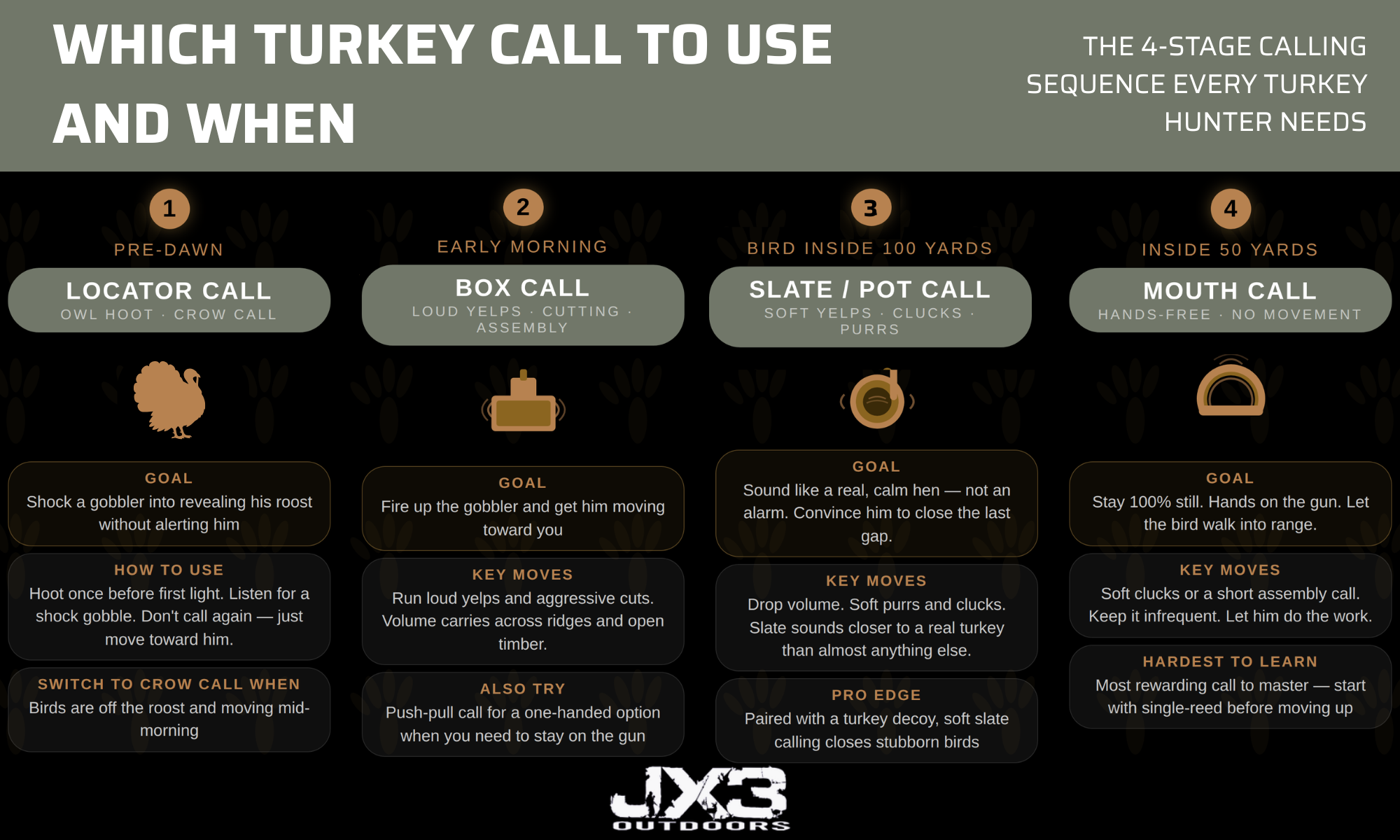
The Short Answer: Match the call to the moment. Use a box call to locate and fire up a long-distance turkey early in the morning. Drop to a slate call when a bird is hung up and needs softer, more convincing hen talk to close the gap. Reach for a mouth call when a tom is in close and you cannot move a muscle. The rest of this post breaks each one down so you know exactly how to use them during turkey season.
Box Calls: The Loudest Tool in Your Turkey Vest
A box call is the first turkey calling tool most hunters ever pick up, and there is a good reason for that. It produces loud, high-pitched yelps and cuts that carry a long way through open timber and rolling terrain. If you need to reach a long-distance turkey gobbler across a field or down a hollow, a box call is your best option.
How to Work It
The way it works is simple. The paddle drags across the top of the box to create a soft, raspy sound that mimics a real hen turkey. Some hunters joke that a box call is closer to a musical instrument than a piece of hunting gear, and they are not wrong. Tilt the call, adjust your pressure, and you can dial in everything from soft clucks to an aggressive, excited hen that sounds like a real turkey looking for a fight.
When to Use a Box Call
Box calls shine during the early morning when male turkeys are still on the roost and hammering at anything that talks back. They are also your go-to when birds have gone quiet and you need to rattle something loose. Run an aggressive cutting and yelping sequence and cover ground until something answers.
The one downside to box calls is noise and movement. Running one takes both hands and produces visible motion, which is a problem when a gobbler is already working toward you. Most turkey hunters use the box call to locate and fire up birds, then switch to something quieter as the bird gets close. Keep it in your turkey vest but know when to put it down.
The push-pull call is a variation worth keeping in your vest too. It is one of the simplest calls to operate, using a spring-loaded rod that you push and pull to produce yelps and clucks. It is a great backup option and easy to run with one hand when you need to stay ready on your gun or bow.
Slate Calls: The Most Versatile Call in the Turkey Woods
If the box call is your hammer, the slate call is your scalpel. A slate call, also called a pot call, gives you more range and control than almost any other call on the market. Run it softly and you can mimic the subtle clucks and purrs of live hens feeding through the leaves. Push it harder and you can produce sharp cuts and yelps that carry well across open ground.
How to Work It
The striker drags across the surface of the pot in small circles, ovals, or straight lines depending on what turkey sound you want. Different surfaces produce different tones. Slate gives you a warm, raspy sound. Glass runs cleaner and cuts through wind better. Aluminum is loud and high-pitched, closer to the sound of an excited hen turkey in the early season.
When to Use a Slate Call
Where slate calls really earn their spot is in pressured turkey situations. Birds that have been called to all season start to sound-check everything they hear. A slate call in the hands of someone who has put in the time sounds closer to a real turkey than almost anything else. That is why experienced turkey callers lean on pot calls when a bird is hung up just out of range and needs something subtle to close the deal.
One Thing to Watch
Box calls do have one weakness: moisture. Wet surfaces kill the sound on a slate call. Pack a piece of sandpaper to condition the surface and keep your call dry. The National Wild Turkey Federation breaks down every turkey sound in detail if you want to sharpen your ear for what realistic calling should actually sound like.
Mouth Calls: The Hands-Free Option That Changes the Game
How to Work It
A diaphragm call is the hardest turkey call to learn and the most valuable one to master. It sits against the roof of your mouth and produces sound with air pressure and tongue position alone. No hands. No movement. Just you and the bird at close range with nothing in your way.
When to Use a Mouth Call
This matters because turkey calling is a game of stillness. When a gobbler is drumming at thirty yards and scanning for the hen he thinks is waiting on him, any movement you make is going to blow the setup. A mouth call lets you keep both hands on your gun or bow, stay perfectly still, and keep talking to the bird without tipping him off. Mouth calls can produce every turkey sound. Soft tree yelps in the dark, subtle clucks as a bird closes in, and sharp assembly calls when you need to regroup scattered birds. The diaphragm call is also the tool of choice for mimicking a jake gobble or jake yelp, sounds that can trigger a dominant male turkey into charging without hesitation.
Getting Started
The learning curve is real. Most hunters struggle with diaphragm calls at first. The NWTF's breakdown of mouth call types and sounds recommends starting with a single or double-reed call before moving to more aggressive cuts. Practice in the truck, in the living room, anywhere you can get reps. Once it clicks, you will not want to hunt without it.
When to Use Each Call and How to String Them Together
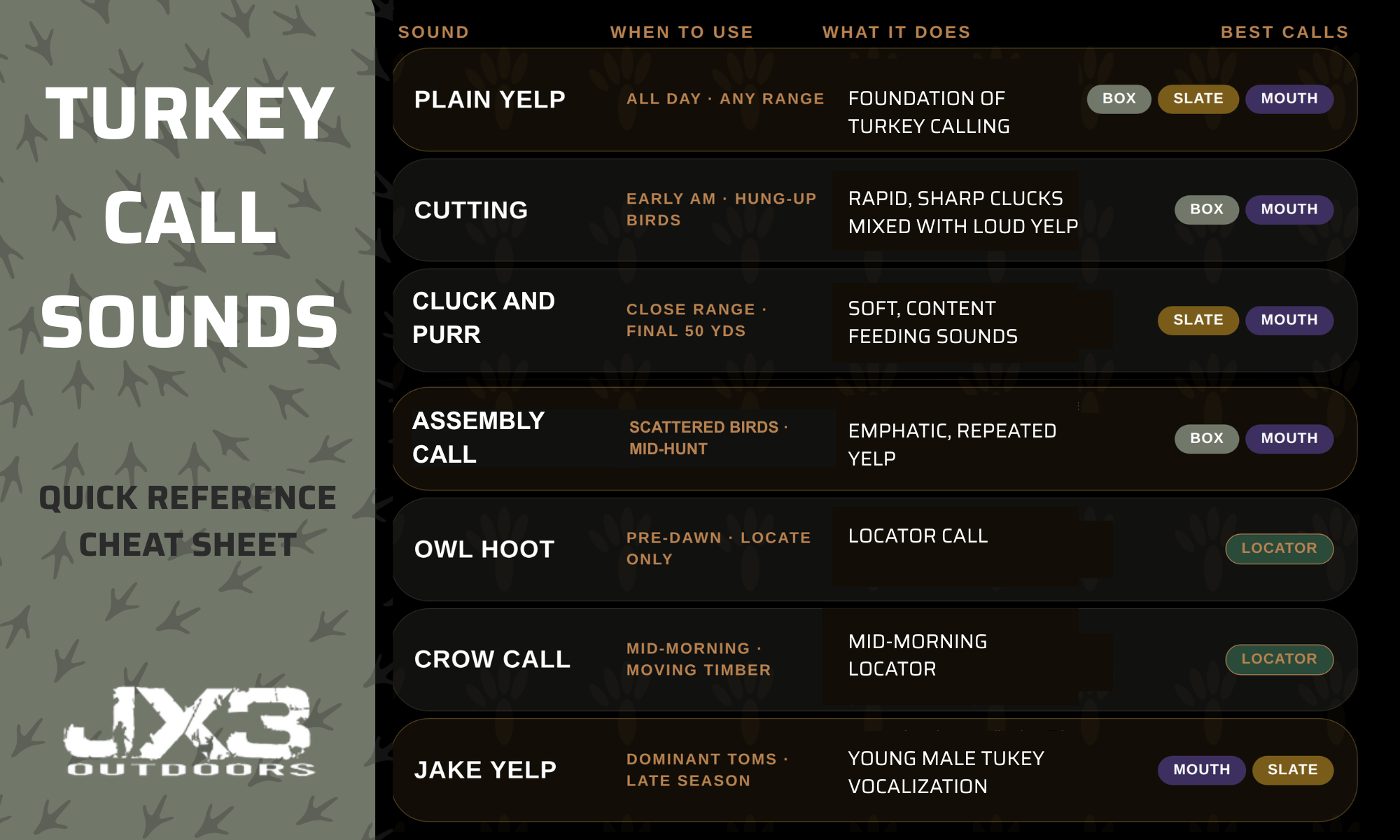
Knowing how each call works is one thing. Knowing when to deploy each one during a hunt is what separates consistent turkey hunters from guys who just get lucky.
Start the morning with a locator call. An owl hoot just before dawn is one of the most reliable ways to shock a gobbler into giving away his roost location without putting him on alert. A crow call works the same way once birds hit the ground mid-morning. Either one can produce a bird gobble that pinpoints your target before you ever make a hen sound.
Once you have a bird located, reach for your box call. Fire off a series of loud yelps and cuts. Work toward him, set up with a clear shooting lane, and let him come to you.
After you are set up and the bird is responding, transition to your slate call. Tone it down. Run soft yelps, clucks, and purrs. You want to sound like a calm, willing hen, not an alarm. If you have a turkey decoy set out, soft subtle calling paired with a decoy is often all it takes to close the final distance on a hung-up bird. Aggressive calling works on fired-up toms early in turkey season, but a stubborn bird in the late season usually responds better to patience.
When the bird is inside fifty yards and closing, put the slate call down and move to your mouth call. Keep your calls infrequent. A soft assembly call or a few subtle clucks is usually enough. Let him close the gap on his own and be ready when he steps into range.
If a bird hangs up and goes silent, do not panic. Go quiet for several minutes. Then hit him with a short, sharp cutting sequence on the box call to suggest the hen is losing interest and moving off. That often breaks a stubborn gobbler loose.
The Right Gear Makes Every Turkey Hunt More Productive
Turkey hunting rewards hunters who are mobile, patient, and prepared. The calls in your vest are only part of the equation. Being able to move quickly when a bird hangs up, reposition without spooking him, and sit comfortably for hours with or without a tree while you wait him out are just as important as being able to call.
The JX3 Hybrid Hunting Saddle can be tethered up at ground height and allows you to pivot easily and quietly, keeping the tree between you and the turkey. It also converts into a low-profile ground chair when a tree is not feasible and keeps you comfortable and steady during long setups, and the built-in backpack feature lets you pack out a full-grown turkey hands-free when the shot connects. Pair it with the JX3 Versa Pack System to keep your calls, optics, and gear organized and within reach from the time you leave the truck to the time you tag your bird.
JX3 builds everything with intention, keeping hunters who cover ground on public land and need mobile gear in mind. Check out the full lineup of JX3 Outdoors products and watch gear in action on the JX3 videos page.