
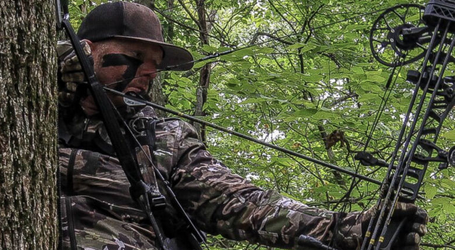
How to Bow Hunt Deer: Tips for Accuracy, Stealth, and Safety
Aug 26th 2026
The Short Answer: Learning how to bow hunt deer comes down to three things. Get within about 30 yards of a deer, draw your bow without being seen, and make one accurate shot to the vitals. Do all three and you have your deer.
If you already gun hunt, you already know the basics of deer hunting, like how to find deer and sit still. The bow changes one thing that shifts everything else: your range. A rifle lets you shoot a couple hundred yards, but a bow brings that down to about 30 yards or less.
You cannot sit back and watch a field. You have to set up right where the deer walks and stay hidden well enough to draw while a white-tailed deer stands a few steps away. That is the challenge of bow hunting, and the rest of this post covers how to get set up and how a hunt works from start to finish.
Before Hunting, Get Your License and a Bow You Can Shoot
Confirm Your License and Season
As a gun hunter, you already carry a hunting license and a deer tag, but bow hunting often takes a separate archery license, special permit, or stamp for archery season. Some even make you pass a bowhunter education course first. One upside of going the archery route is timing. Archery season usually opens before firearms season, so you get weeks in the woods before legal firearms are allowed.
Check your state's regulations before you buy anything, including the bag limit, whether your tag covers an antlered or antlerless deer, and what it takes to harvest an additional deer. The rules vary a lot from state to state, so every deer hunter should confirm the details before the hunting season starts. Our general deer hunting Q&A page has articles covering hunting laws, ethics, and more.
Get a Bow You Can Shoot Well
Most new bow hunters start with a compound bow. Set the draw weight to something you can pull back slowly and hold steady while seated, not the heaviest you can manage. Pair it with matched arrows and broadheads made for hunting.
Practice with field points to get a feel for it, then switch to broadheads before the season so you know how they will fly. A local archery shop can also help tune the bow and set you up right if you aren’t sure where to start. You do not need the most expensive bow on the rack. One you shoot well will kill more deer than a pricey bow you cannot handle will.
Practice the Way You Will Hunt
Accuracy is where bow hunting is won or lost, and it comes down to practice. The problem is that most people practice the wrong way. They stand flat-footed in the yard and shoot at a target the same distance every time. Then they climb into a tree, sit down, and try a downward shot at an angle they have never rehearsed. Practice the way you will actually hunt, and the real shot feels familiar.
Shoot from a seated position and from up in your stand or saddle, not just standing on the ground. If you hunt from a JX3 Hybrid Hunting Saddle, practice drawing from different positions and angles, since the saddle lets you turn and shoot around the tree in ways a fixed stand will not. Practice the steep downward angle you get from a tree, since it changes where the arrow lands. Shoot in the clothes you will hunt in, and shoot in low light conditions, since that is when deer move the most.
The last piece is knowing your honest range. Every hunter has a distance where he can put the arrow in the vitals nearly every time. Find yours in practice, then hunt inside it. If you shoot well at 30 yards but not at 40, your range is 30. Refusing a shot past your limit is not being timid. It is the accurate, ethical call, and it is the difference between a clean harvest and a long night tracking a wounded deer.
How a Bow Hunt Plays Out
Get Within Bow Range
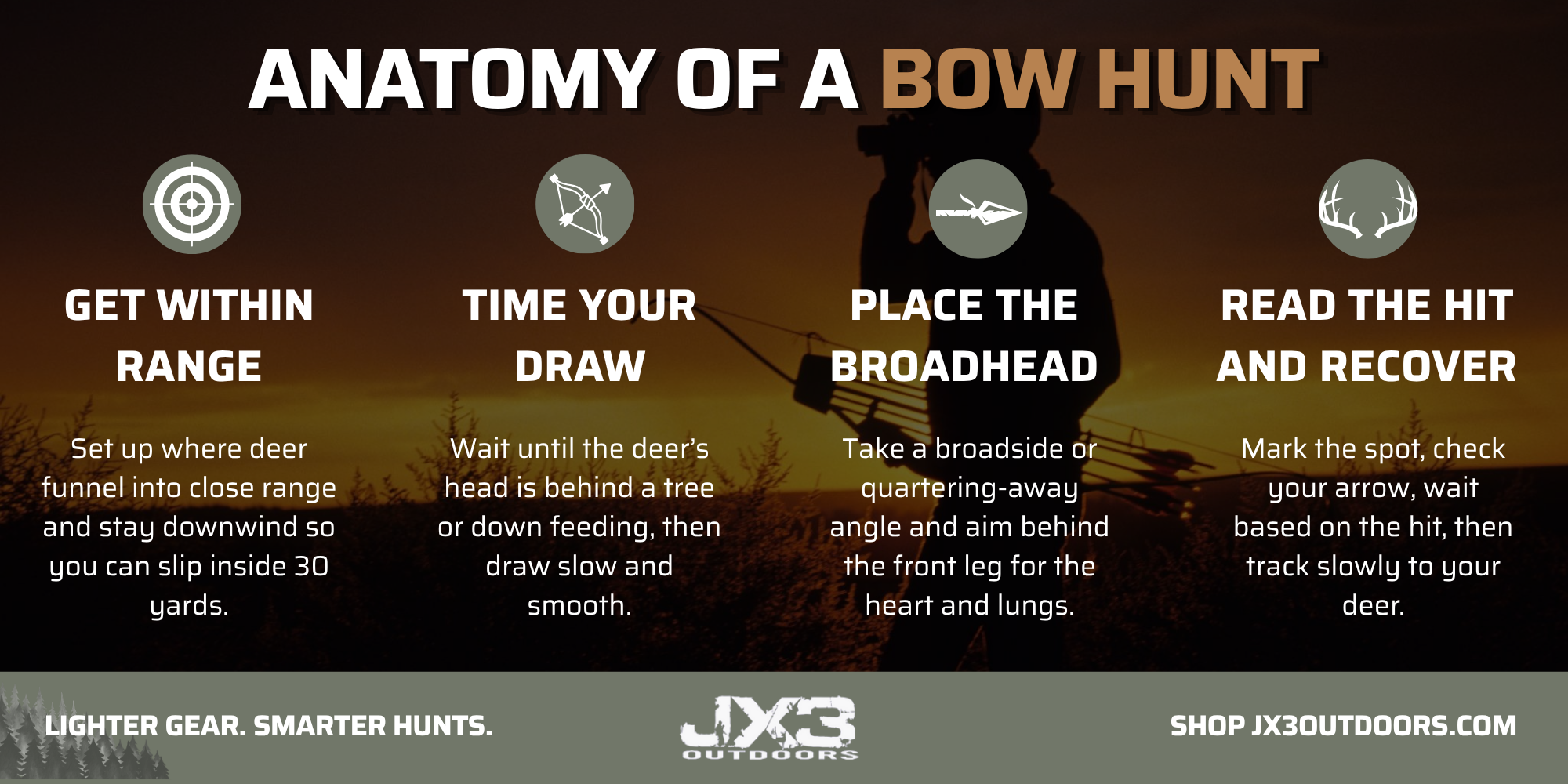
Where you set up is everything. Find the spots where deer are funneled into close range, like travel corridors between a bedding area and a food source, a pinch point where the cover narrows, or a trail leading to water. This holds true on private property and public land alike, though on a wildlife management area you may face more pressure for the good spots. For more on picking and hanging your sets, see our stand location tactics.
Being mobile is a real advantage here. A JX3 Hybrid Hunting Saddle and a set of JX3 Climbing Sticks let you hunt the exact tree you need to and even change locations on the fly depending on changing deer patterns and the wind. Set up downwind of where you expect the deer, since a whitetail deer will smell you long before you see it. it ever steps out.
Stay Still and Time Your Draw
A trail camera you ran through the summer pays off now, since knowing how the deer herd moves lets you predict when and where a buck will be. At close range, a deer catches almost any movement, so the trick is drawing your bow without being seen.
Wait until the deer's head is behind a tree or down feeding, then draw slowly and smoothly. Do not rush it. Keep your gear tucked in tight and reachable so you are not shifting around at the wrong moment. Accessories like the JX3 Versa Pack System keep your calls, rangefinder, and release within reach so you can stay still until it is time to shoot.
Put the Broadhead Where It Counts
Shot placement matters more with a bow than a gun, because a broadhead kills by cutting, not shock. Wait for a broadside or slightly quartering-away angle, and aim about one-third of the way up the body, just behind the front leg, for the heart and lungs.
Pass on anything facing you head-on or quartering hard toward you, since those angles do not give you a clean path to the vitals. Waiting a few extra seconds for the right angle beats forcing a bad shot.
Read the Hit and Recover the Deer
After the shot, watch the deer and mark where it was standing. Then watch where it runs and listen. Find your arrow and check it, since the blood on it tells you where you hit. Bright red or pink and bubbly usually means a good hit in the vitals.
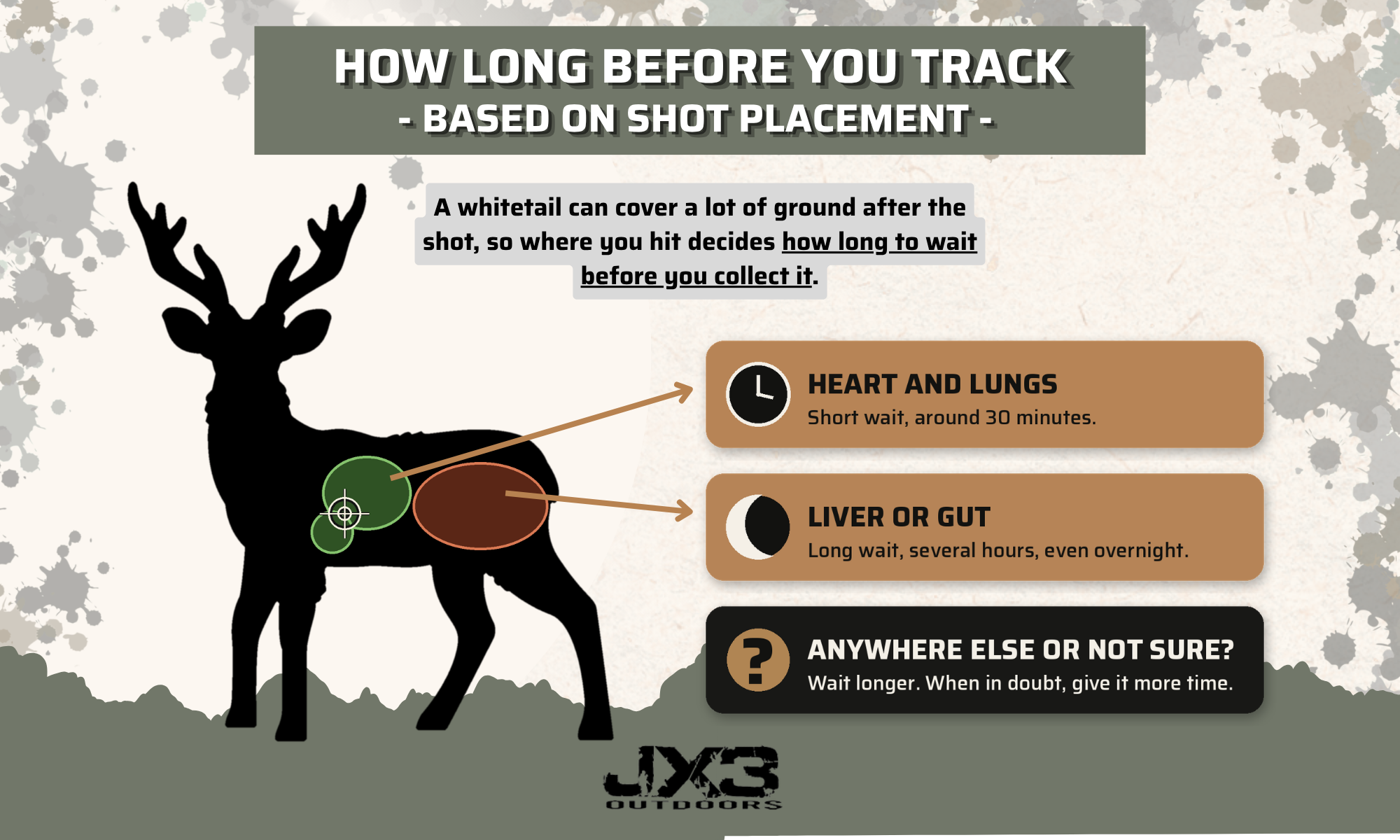
Here is the part most new bow hunters get wrong: wait before you track. How long depends on where you hit the deer. A good hit through the heart and lungs needs only a short wait, often around half an hour. A hit farther back in the liver or gut takes much longer, sometimes several hours or even overnight, because pushing that deer too soon will cost you the recovery. When you are not sure, wait longer. Once enough time has passed, follow the blood slowly and quietly to recover your deer.
Set Yourself Up to Succeed
Bow hunting rewards the hunter who prepares. Get your license squared away, practice until you trust your shot, and put in the work to get close. Stay tied to the tree when you are up high, and skip any shot you are not confident in. Do that, and your first season of deer hunting with a bow will teach you more about deer than years behind a rifle did.
None of it happens overnight, so give yourself time to learn. If you are new to hunting from a tree, our Deer Hunting 101 hub and our guide to saddle hunting are both good places to start. When you are ready to build a setup that fits the way you hunt this season, take a look at the full JX3 Outdoors lineup for quality gear that will make your trip easier and more comfortable.