
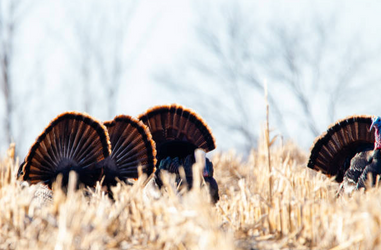
How to Scout for Turkeys Before the Season Starts
Mar 6th 2026

The Short Answer: Start early, stay consistent. Scouting for turkey isn't something you knock out the weekend before the season opener. If you want a successful hunt when spring turkey season rolls around, you need to start putting in the work during the winter months, long before the first gobble echoes through the timber. The best turkey hunters treat scouting like a season of its own.
Here's the quick version: scout early, scout often, and pay attention to what the land and the birds are telling you. Start with e-scouting to identify likely roost sites, food sources, and travel routes. Then get boots on the ground to confirm turkey sign like tracks, droppings, scratching, dust baths, and drag marks. Use trail cameras to pattern daily routines. And don't overlook the role of food plots and agricultural fields in pulling birds into predictable areas. The rest of this post breaks all of that down.
Read the Land Before You Read the Bird: E-Scouting and Mapping Your Ground
Before you ever set foot in the turkey woods, your first move should be behind a screen. E-scouting with satellite imagery and topo maps is one of the most underrated tools in a turkey hunter's playbook, especially if you're hunting public land where access points and pressure can make or break your setup.
What to Look for on Aerial Maps
Pull up satellite imagery and start looking for terrain features that turkeys gravitate toward. Here's what to zero in on:
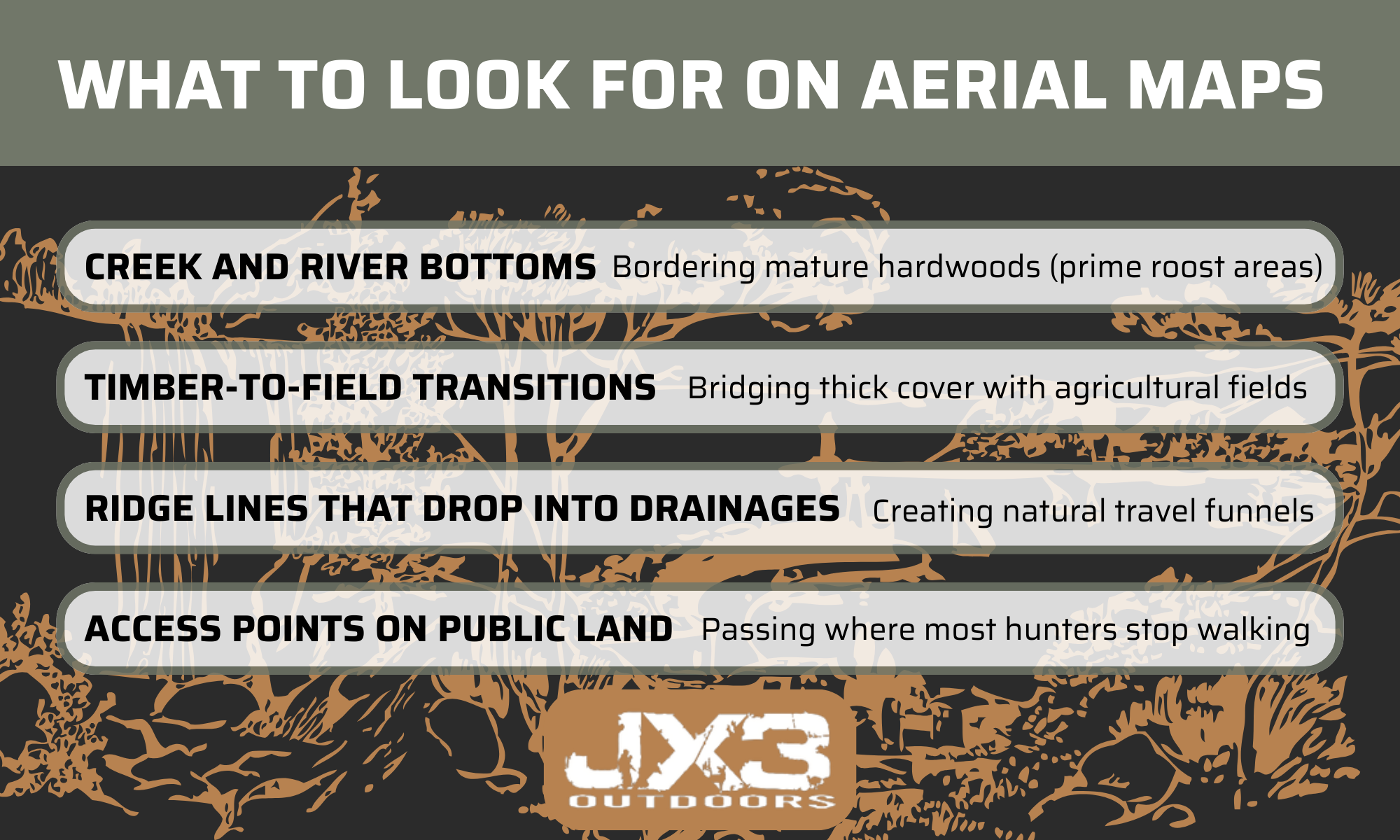
These edges create natural travel routes that turkeys follow between roosting, feeding, and strutting. The same principles that apply to patterning deer on game trails apply here. Find where birds want to be, then figure out how they're getting there.
Narrowing It Down Before You Walk In
Turkeys on pressured ground learn fast. The birds that survive opening weekend are usually the ones living a quarter mile past where most guys stop walking. Mark those spots. The NWTF has a solid breakdown on speed scouting if you're short on time and need to maximize your e-scouting before you hit the field.
If you're lucky enough to hunt private land, the same principles apply. You just have less competition. Either way, e-scouting lets you narrow down thousands of acres into a handful of spots worth checking in person. That saves you time and keeps your boots from educating birds before the season even starts.
Food Plots, Fields, and Funnels: Where Turkeys Actually Want to Be
If you want to consistently find wild turkeys, follow the food.If you're managing land or have any say in habitat, food plots are one of the most effective tools you can use to stack the deck in your favor. Understanding how turkeys and other game use your property starts with knowing where the groceries are.
Placing The Right Food Plots Where They Count
Turkeys aren't just wandering aimlessly. Their daily routine revolves around food sources. In early spring, birds are coming off the stress of winter and actively seeking high-protein forage. Clover plots, winter wheat, and chicory are all magnets for turkeys during this window. A well-placed food plot does double duty: it feeds the birds and it creates a predictable destination you can hunt around.
The key with food plots is placement. You want them near known roost trees so birds can fly down and feed without covering a ton of ground. A plot tucked along a creek bottom or at the base of a timbered ridge where birds roost is going to see way more use than one stuck in the middle of a random field. Think about how turkeys move off the roost. They want to get to food quickly and with good visibility. A food plot that gives them both is going to be a strut zone by mid-morning.
Using Agricultural Fields and Funnels
Agricultural fields work the same way on a larger scale. Turkeys love freshly turned ground, picked corn fields, and anything with waste grain or emerging green growth. During the winter months, winter flocks of turkeys often concentrate on agricultural fields because that's where the groceries are. If you're seeing large flocks hitting the same fields day after day, mark those locations. Many of those same birds will scatter during breeding season, but the hens (and the toms chasing them) will often stay in the same general area.
Don't just note where turkeys are feeding. Pay attention to how they're getting there. Look for funnels between food sources and roost sites, like narrow strips of timber, fence lines, or low spots that channel birds along specific routes. These pinch points are gold for setting up an ambush during turkey season.
Boots on the Ground: Signs, Sounds, and What They're Telling You
E-scouting and food plot strategy will get you in the neighborhood, but nothing replaces time in the field. This is where you confirm everything you’ve prepared and start building a real picture of turkey behavior in your area. As the NWTF points out, pre-season scouting with trail cameras or boots on the ground is what separates consistent hunters from guys just hoping for the best.
Reading Physical Turkey Sign
Start by looking for physical signs. Knowing the difference between tom and hen signs can tell you exactly what's using an area.

Turkey scratching (those distinctive cleared patches in leaf litter where birds have been digging for bugs and acorns) tells you turkeys are actively using an area. Large areas of scratching usually mean multiple birds feeding together.
Dust baths are another reliable turkey sign to look for, especially along field edges, gravel roads, and dry creek banks. If you find a well-used dust bath, that's a spot birds are hitting regularly. If you find drag marks with the dust baths, that’s the holy grail. It means a gobbler is actively displaying in that area, and you've likely found a strut zone.
Trail Cameras: Let Them Scout While You Sleep
Trail cameras set up on food plots, field edges, and known travel routes can fill in the gaps when you can't be there in person. Run them from late winter through early spring to pattern when and where birds show up. A camera on a food plot entrance will tell you exactly what time turkeys are arriving and whether you're dealing with a lone gobbler or a pile of hens with a tom in tow. That kind of intel is invaluable.
Listening and Glassing From a Distance
For audible scouting, hit the woods in late afternoon or just before dawn. Here's how to use locator calls effectively:
- Owl call at dusk can trigger a shock gobble from a tom on the roost, pinpointing his roost tree
- Crow call during the day works the same way to locate birds mid-routine
- A distant gobble, even from long distance, gives you a direction to investigate
During early spring, listen for gobbling activity to ramp up as breeding season approaches. That's your signal that birds are getting vocal and establishing patterns.
Use a spotting scope to glass open fields and agricultural fields from a distance. Late afternoon is prime time to watch turkeys feeding in fields before they head to roost. You can learn more about turkey travel routes and daily routine from one evening of long-distance observation than from hours of walking through the woods and bumping birds. If you're scouting for a youth hunt, this low-impact approach is especially smart. You want those birds calm and patterned, not spooked and scattered.

Dial It In: Putting Your Pre-Season Intel to Work
All the scouting in the world doesn't mean much if you can't execute when the season opens. The goal of pre-season turkey scouting is to walk into the woods on opening morning with a plan, not a guess.
Know Your Setup Before Opening Day
By the time turkey season arrives, you should know where birds are roosting, where they're feeding, and how they're getting between those two spots. You should also have a good idea of what time gobblers are hitting the ground in the morning and where they're strutting by mid-morning. If you've done the work, you'll have multiple setups identified so you can adjust based on wind, weather, and turkey behavior on any given day.
Gear That Keeps Up With Your Scouting
This is where your gear matters, too. Being mobile enough to adjust on the fly is a huge advantage when a bird doesn't do what you expected. JX3 Outdoors builds gear for hunters who actually spend time in the field, not the ones who show up once a year and hope for the best. The JX3 Hybrid Hunting Saddle easily converts to a low profile ground chair and gives you lightweight mobility and all-day comfort, whether you're running and gunning through the turkey woods or sitting tight on a patterned bird. Pair it with the JX3 Versa Pack System to keep your calls, optics, and gear organized and within reach, from early-season scouting trips all the way through your last day in the field. With the built-in backpack feature of the Hybrid, you can also pack out a full grown turkey hands free. Check out the full lineup of JX3 Outdoors products built by hunters, for hunters.
Put in the pre-season work. Trust what the birds are showing you. And when the moment comes, be ready.