
Wind & Scent Control for Hunting: Techniques, Products & Best Practices
Jul 13th 2026
The Short Answer: Deer hunting scent control is two jobs. Play the wind first, then cut your human odor with a layered routine. Get both right, and you stay in range of deer that would have winded you on the way in.
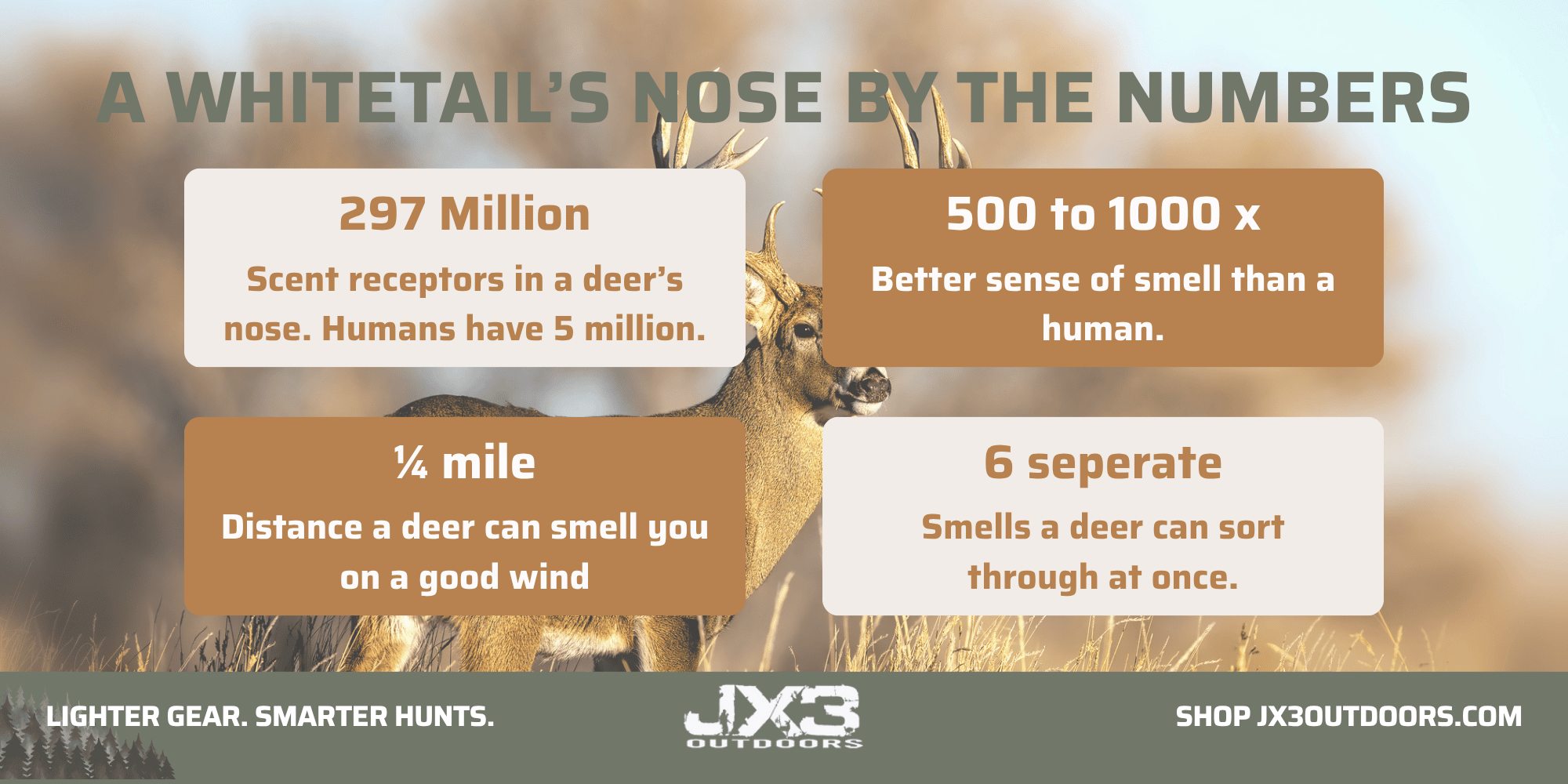
A mature buck can wind you from a quarter mile off, and once he smells you, the hunt is over. No spray or carbon suit fixes a bad wind, so it has to drive every setup. In practice, that means you scrub down, wash your clothes the right way, and treat your gear before you walk in, then read the wind on the ground to pick your tree once you get there. The rest of this post breaks down each piece so you can build a plan that holds up in the woods.
A Whitetail's Nose Is His Best Defense
A deer lives and dies by its nose, and a whitetail's is one of the best in the woods.
How a Deer Reads Scent
A deer reads odor molecules the way you read a road sign. The scent tells him what you are, how close you are, and which way you are moving. He trusts that over his eyes and ears every time. A deer might second-guess a sound or a shape, but he never second-guesses his nose. He can even pull apart several smells at once and lock onto the one that means danger, all while feeding or chasing a doe. That is why a little human scent goes a long way.
That nose only gets sharper with age. A buck does not just survive on instinct; he learns, and every season teaches him to tie human scent to danger faster than the year before. A mature buck is even harder to fool. A young deer might stop and try to figure out what you are, but an old buck does not bother. One whiff of human scent and he is gone before you ever see him. That is why the deer you want most is the one your scent profile has to beat.
Picture Where Your Scent Goes
Your job is to understand where your odor goes once it leaves your body. Wind carries human scent downwind and pools it in low spots and creek bottoms. Picture the path your scent takes from your stand, and you start to see the woods the way a deer smells them. Get that picture right, and the rest of your scent control plan falls into place.
Hunt Based on the Wind
Check the Wind Every Sit
Wind direction is the most powerful tool you have, and it costs you nothing. The catch is you have to constantly check the wind for every single sit. Check the wind the second you step out of the truck, then check it again at your tree. A weather app gives you the general direction, but the wind on the ground lies to you all the time. Carry a wind checker or a puffer bottle and watch where the powder drifts. Some hunters pull a few strands of milkweed and let them float. Either way, you want to see your scent, not guess at it.
Work the Thermals
Thermals trip up a lot of hunters. Warm air rises and cool air sinks, so your scent does the same thing. In the morning, the ground heats up, and your scent lifts uphill. In the evening, the air cools and your scent slides downhill into the low spots. The rule of thumb is to hunt high in the morning and low in the evening, but the National Deer Association has a good breakdown of how thermals move your scent if you want to dial it in for your ground.
Pick the Tree, Not the Stand
The right tree for today's wind is rarely the easy tree. A fixed stand only plays one wind direction, so when the wind is wrong, you either sit it and risk getting winded, or you stay home. Neither one fills a tag. A mobile setup lets you hunt the tree the wind picks instead of the tree you hung in July. The JX3 Hybrid Hunting Saddle and a set of JX3 Climbing Sticks let you pick a fresh tree, climb quietly, and settle comfortably. If you are new to saddle hunting, our guide to saddle hunting covers the setup, and these climbing stick attachment methods help you climb fast and quietly. If the wind swings mid-sit, a saddle lets you spin around the trunk and stay off a buck's nose. Plan your walk-in, too. A clean tree means nothing if you drag your scent through the bedding area getting there. Our Deer Hunting 101 page covers more on reading your ground.
Reduce the Human Scent You Leave Behind
Playing the wind buys you the most ground, but you still leak odor every second you are in the woods. A solid scent control regimen knocks that down to a level a deer is more likely to write off. Think of it in layers, because no single product does the whole job.
Start Clean at the House
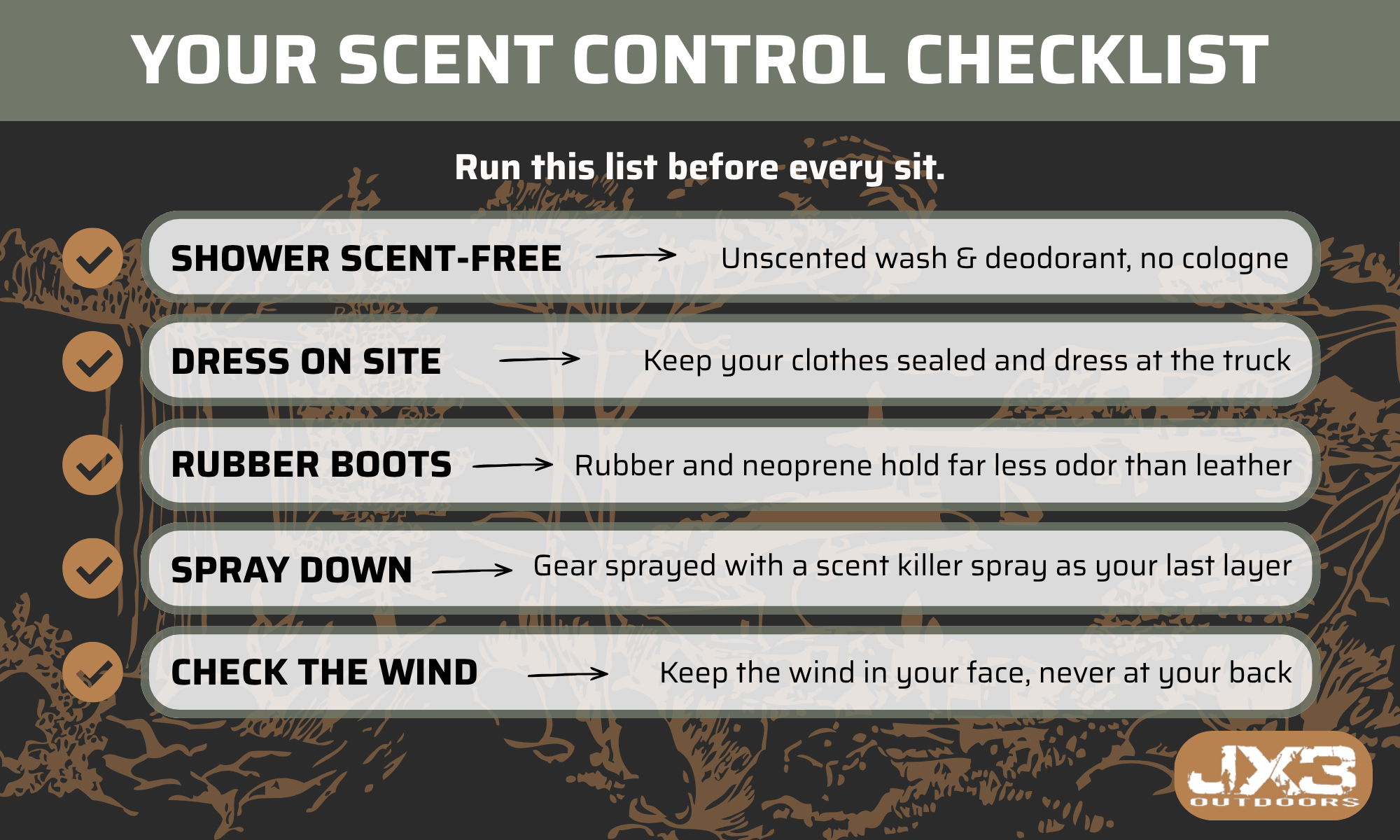
Shower with a scent-free body wash and wash your hunting clothes in a fragrance-free detergent, not the stuff loaded with perfume. Store those clothes in a sealed tote or bag, not your closet where they soak up house odor. A lot of hunters keep their gear sealed at deer camp and dress at the truck so their clothes never pick up gas, food, or smoke on the way in. Build your clothing in layers too, from a clean base layer out to your outer layer, and a carbon suit can trap some of the odor your body throws off.
Do Not Forget Your Boots
Your feet leave the heaviest scent trail of anything you carry, because you press it right into the dirt with every step. Rubber boots or neoprene boots hold far less odor than leather or fabric, so less of you ends up on the ground where a deer will cross it later.
Spray Down Before You Walk In
Right before you walk in, hit your boots, clothes, and gear with a scent killer spray from a spray bottle. These products are built to break down odor compounds instead of just covering them. A cover scent can help in the right spot, too. Keep your sprays in reach with the right Versa Pack accessories so you can re-treat fast at the truck and in the tree.
Keep Your Expectations Honest
These products reduce human scent; they do not erase it. Penn State's researchers make a case that no clothing makes you invisible to a deer's nose. Treat scent control as backup to the wind, never a replacement for it.
Staying Mobile Is Your Best Advantage
When it all comes together, scent control is less about the gear in your pack and more about staying flexible. Every spray, soap, and carbon suit on the market still loses to a hunter who keeps the wind right. The hunter who can move with the wind is the one who beats a buck's nose.
The JX3 Hybrid Hunting Saddle and a set of JX3 Climbing Sticks let you move in quietly, climb the tree the wind picks, and spin around the trunk when the wind shifts. Add the JX3 Versa Pack System and a few saddle accessories to keep your scent control gear within reach from the truck to the tree. If you are still deciding on a setup, our Saddle Hunting 101 hub breaks it all down.
JX3 builds gear with intention, made for hunters who cover ground and need a setup that moves as fast as the deer do. Pair a smart scent control regimen with the freedom to hunt any wind, and you put yourself in range of the mature bucks that slip past everyone else. Take a look at the full JX3 Outdoors lineup and watch the gear work on the JX3 videos page.