Where to Shoot a Deer: Shot Placement Tips for Hunters
Nov 5th 2026
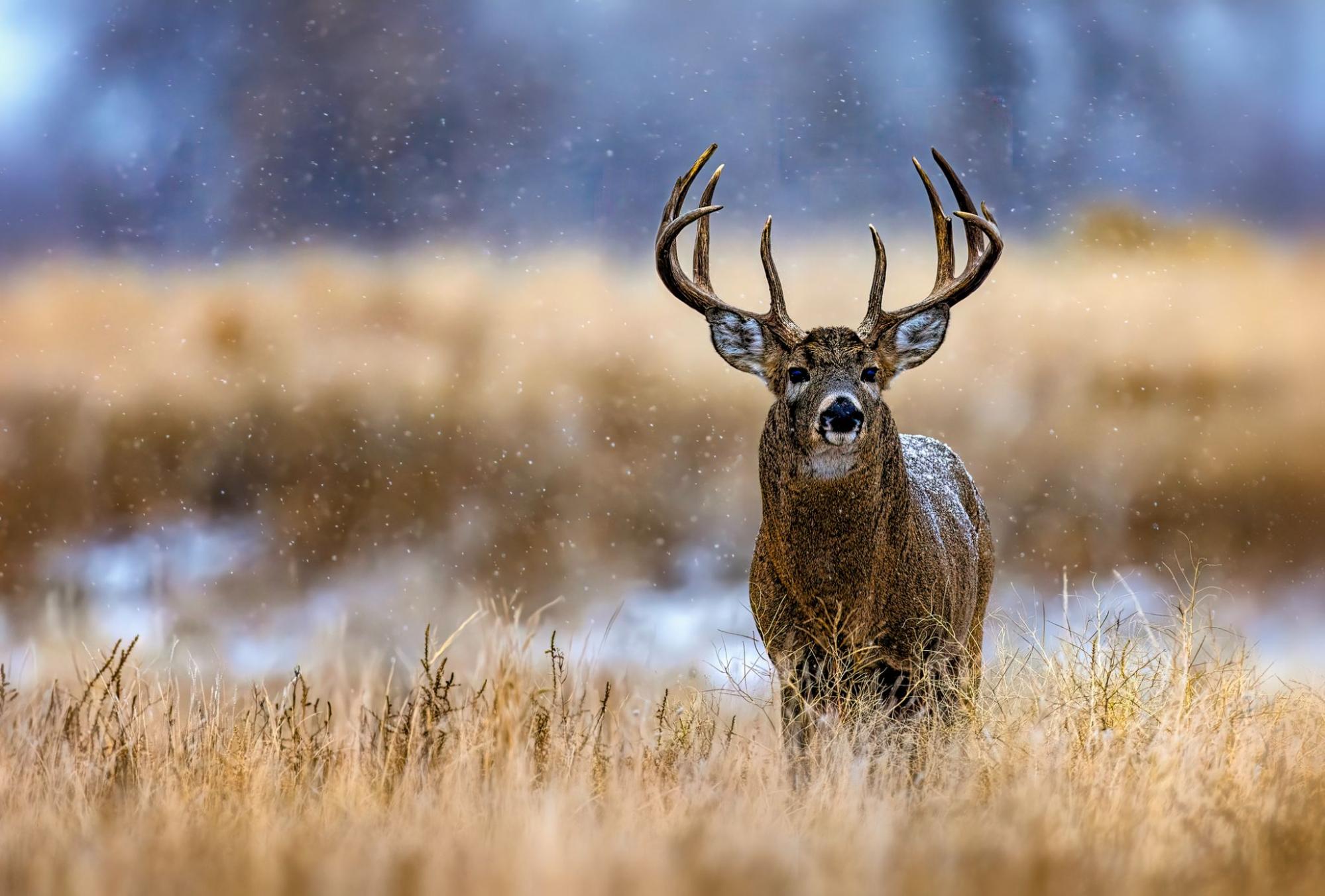
The Short Answer: The best place to shoot a white-tailed deer is the heart-lung area, right behind the front shoulder and about one-third of the way up the chest. On a broadside deer, follow the front leg up and aim just below the midpoint of the body. That aiming point hits the vital organs, gives you the most margin for error, and leads to a quick, ethical kill.
Knowing where to shoot a deer is the difference between a short blood trail and a long, frustrating search for a wounded deer. The vital zone is not large, roughly the size of a paper plate, and a deer rarely stands in an ideal pose.
Good shot placement comes down to understanding deer anatomy, reading the deer in front of you, and knowing which shots to take and which to pass. The aiming point shifts with the deer’s angle, your location, and with your weapon, so a bowhunter and a rifle hunter are not always aiming at the same spot.
The Vital Zone: Where a Deer’s Organs Are
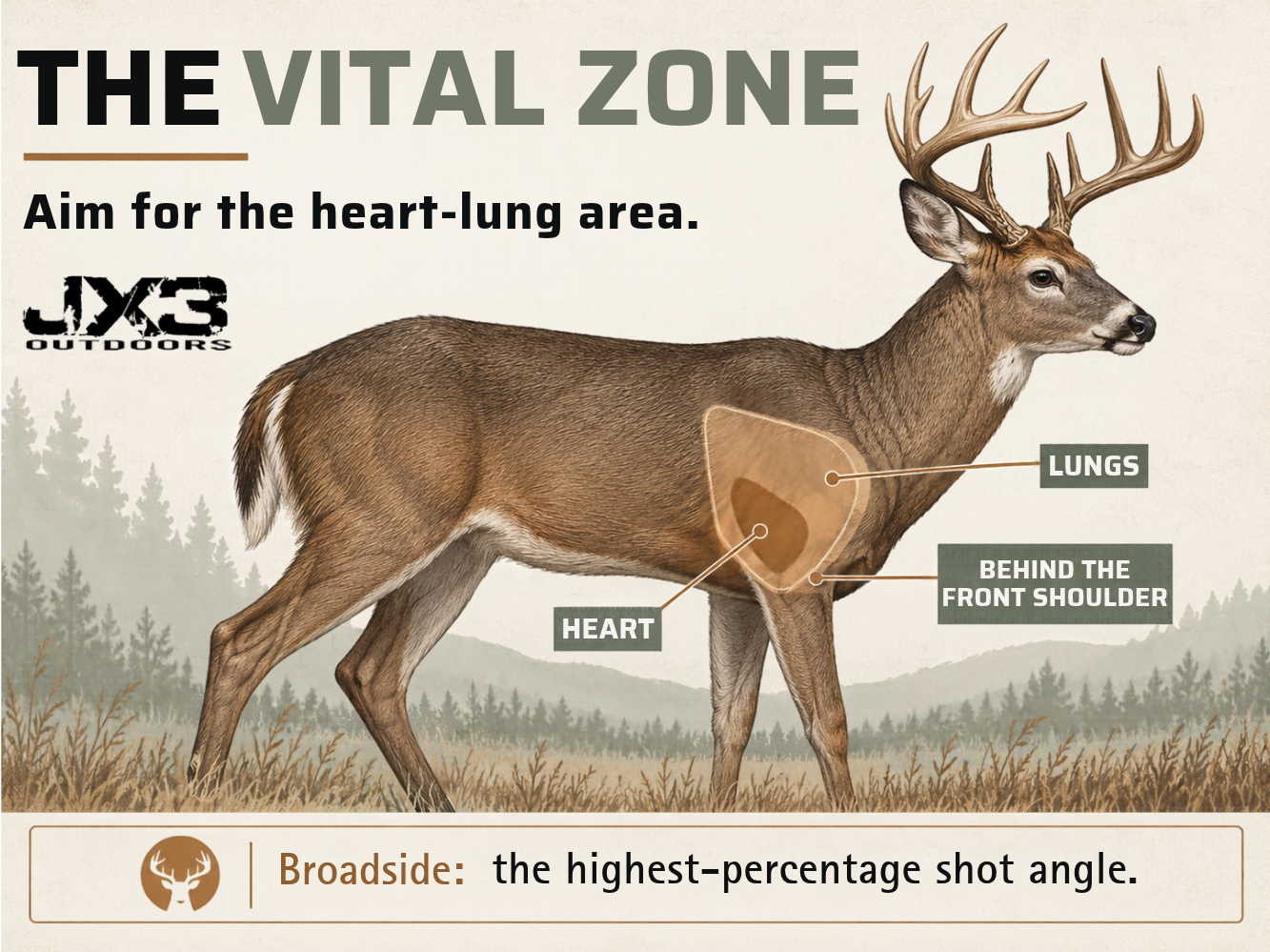
Every good shot targets the same place: the chest cavity that holds the heart and lungs. A deer’s heart sits low in the chest, just behind and slightly above the front leg. The lungs fill the space above and behind it. Together they make up the vital area, the largest high-percentage target on the animal.
Aim there and you can hit organs the deer cannot live without, which brings it down fast. The lungs give you the biggest margin, since they fill a wide section of the chest cavity, while the heart is a smaller target lower in the body. Most hunters set their aiming point on the double-lung zone because it is the most forgiving, and a shot that drifts a little might still find a lung. Stay off the shoulder blade, since that heavy bone can stop an arrow or deflect a bullet before it reaches the vitals. The goal is a clean path into the chest cavity.
Where to Aim by Shot Angle
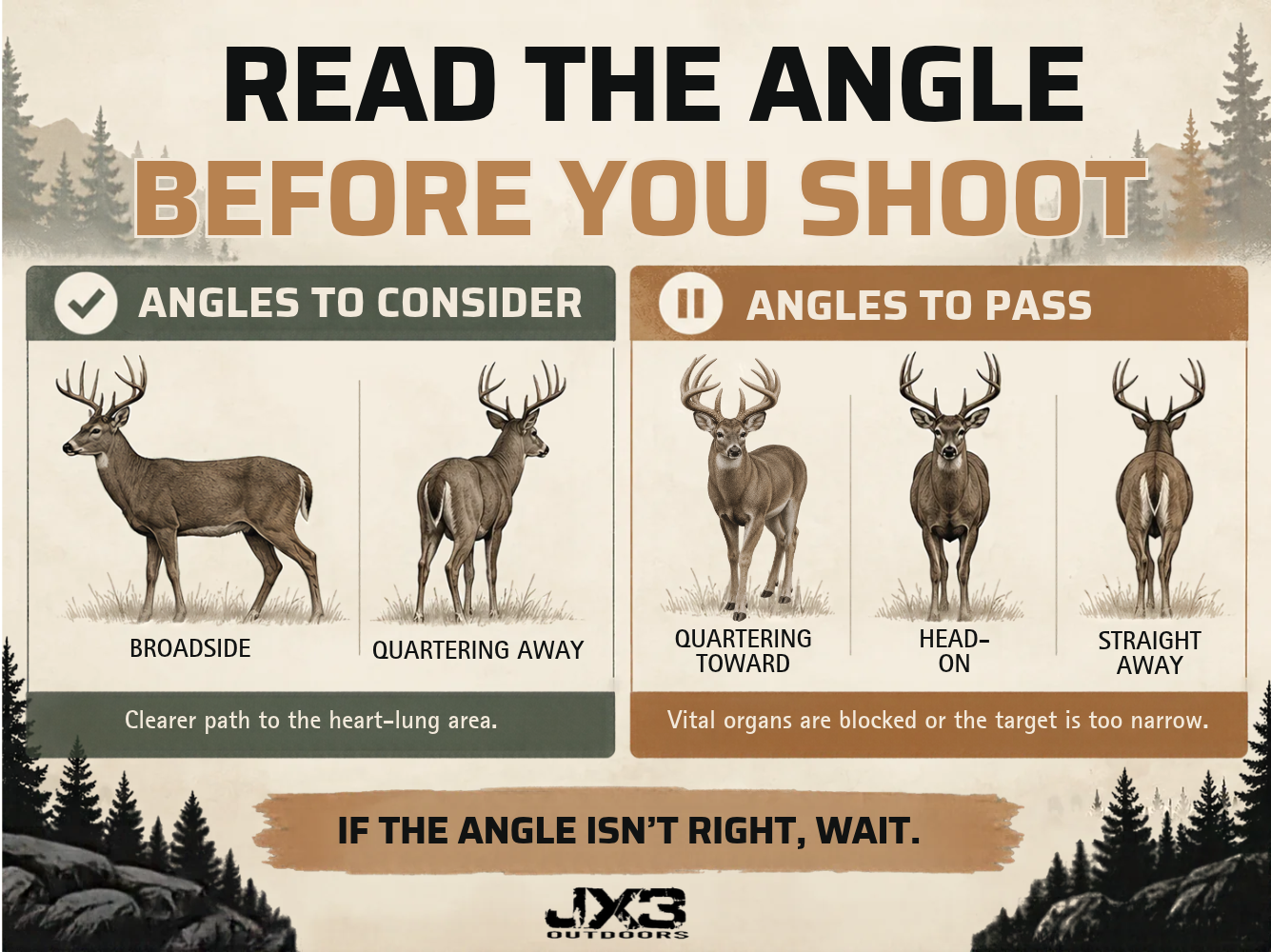
The deer’s angle to you decides where you should put the shot. Two angles are worth taking, and the rest are worth passing.
Broadside
A broadside deer, standing at a 90-degree angle to you with its side fully exposed, is the best shot in hunting. Follow the front leg straight up the body and set your aiming point just behind the shoulder crease, about one-third of the way up from the belly. A broadside shot there puts your shot through both lungs, with the heart sitting right at the bottom edge of your aim. This is the highest-percentage shot a hunter gets, and it works the same for a broadside deer whether you carry a bow or a rifle.
Quartering Away
A quartering-away deer, angled so its body is turning away from you, is the other shot you can take. Many bowhunters even prefer it, since the deer’s head is turned away and it is less likely to notice you drawing. For this angle, aim farther back than you would on a broadside shot, so the quartering-away shot angles forward through both lungs and drives toward an exit wound near the far shoulder. Picture the far-side front leg and drive your shot toward it. A broadside shot and a quartering-away shot are the two angles that give you the cleanest path to its vital organs.
Quartering Toward, Head-On, and Straight Away
These are the shot angles to pass on most of the time. Whether the deer is a doe, or the target buck you have been after, a bad angle is still a bad angle.
A quartering-to shot typically has the near shoulder covering the vitals, so an arrow would have to break through heavy bone to reach them. A head-on shot gives a bow or a crossbow bolt almost no clean path to the chest cavity. A deer walking straight away offers nothing worth shooting at with archery equipment.
A deer that stands a few extra seconds for a better angle is worth far more than a rushed shot at a bad one. Wait for broadside or quartering away, and let the rest walk.
How Shot Placement Changes for Bow and Rifle
The vital zone is the same, but the two weapons do not give you the same margin.
An arrow kills by cutting, not shock, so a bowhunter needs a clean path through soft tissue and has to avoid bone entirely. That makes angle discipline everything. Rifle hunters often get more leeway, since the energy of a quick-expanding bullet carries through and widens the effective kill zone.
Gun hunters can also be a little more aggressive with the aiming point, while crossbow hunters should aim the same heart-lung zone as any archer. A rifle hunter aiming to drop a deer on the spot can hold on the shoulder itself, though that ruins more meat. There is no perfect spot that works at every angle, so read the deer and adjust.
For bowhunters, the rule is simpler: stick to broadside and quartering-away, aim for the lower third of the chest behind the front leg, and wait for the animal to stand still. You get one shot, so make the angle count. Whether you are a rifle hunter, a crossbow hunter, or shooting a vertical bow, the heart-lung zone behind the shoulder is the target every time.
Shooting From an Elevated Stand
Shot placement changes when you are up a tree. From an elevated position, the shot angle sends the arrow or bullet down through the body, so the exit point matters as much as the entry.
Aim so the shot angles down through both lungs and exits low on the far side of the chest. A steep downward shot can pass through only one lung, and a one-lung deer can travel a long way, so wait for the deer to step far enough out that both lungs line up.
Staying mobile is what lets you wait for that angle instead of forcing a shot from a locked-in stand. A JX3 Hybrid hunting saddle lets you turn and set up on the exact trail you are watching, so you can take a clean broadside or quartering-away shot from almost any position on the tree. Paired with a set of JX3 Climbing Sticks, you stay mobile enough to hunt where the deer actually are and comfortable enough to sit still until the right shot comes.
When you are ready to build your setup, take a look at the full JX3 Outdoors lineup and see the gear in action on the JX3 videos page.
Frequently Asked Questions
Where is the best place to shoot a deer?
The best place to shoot a deer is the heart-lung area behind the front shoulder, about one-third of the way up the chest. On a broadside deer, follow the front leg up and aim just behind the shoulder crease. That spot reaches the vital organs, offers the largest target, and gives the most margin for error.
What is the best shot angle on a deer?
The best shot angle on a deer is broadside or quartering-away, for both bow and rifle. Those two angles give a clean path to the vital area and the highest recovery rates. Quartering-to, head-on, and straight-away shots should be passed, especially with a bow.
Where do you aim on a deer with a bow versus a rifle?
Where you aim on a deer is the same heart-lung zone for both a bow and a rifle, but a bow needs a cleaner path through soft tissue, so you must avoid the shoulder bone and stick to broadside or quartering-away angles. Bowhunters in particular have to wait for the right angle, while a rifle gives more margin to aim a bit more aggressively and take angles a bowhunter would pass on.
Should you take a neck shot or head shot on a deer?
You should avoid neck and head shots on a deer in most situations. The targets are small and constantly moving, so a miss by even a couple of inches wounds the deer without a clean kill. Most hunter education programs recommend the larger, more forgiving heart-lung zone instead.
How long should you wait before tracking a deer?
How long you wait before tracking a deer depends on the hit. For a solid heart-lung shot, wait about 30 minutes before taking up the trail. For a hit farther back in the liver or gut, wait several hours or more, since pushing a wounded deer too soon can cost you the recovery. When reading signs and planning your setup, remember that when in doubt, back out and give it time.